This therapist website was created last 2022 and it was only after the 6 months SEO campaign that I customized for them that they started to rank and get the needed traffic they missed for two years.
This is a typical 6 month result example for an aged domain/website. Please note that SEO results after a typical 6 month campaign is different for new websites (websites created in less than a year)
My SEO services makes sure that aged websites get these visible results during and after the 6 months campaign. Here’s a stark difference of what it’s like without SEO optimizations and when you get those services.
The Challenge
This is a Squarespace Website Created in 2022 which was not getting visibility despite the years
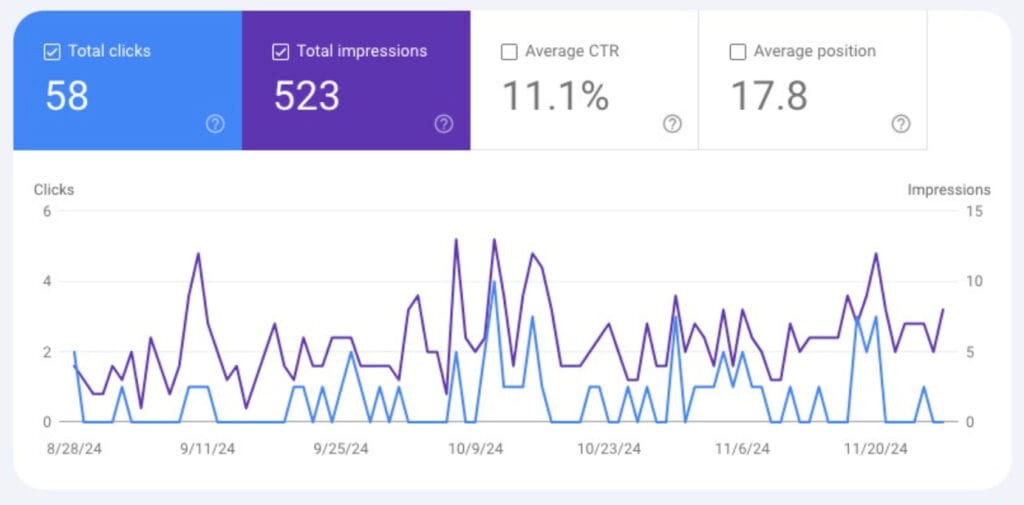
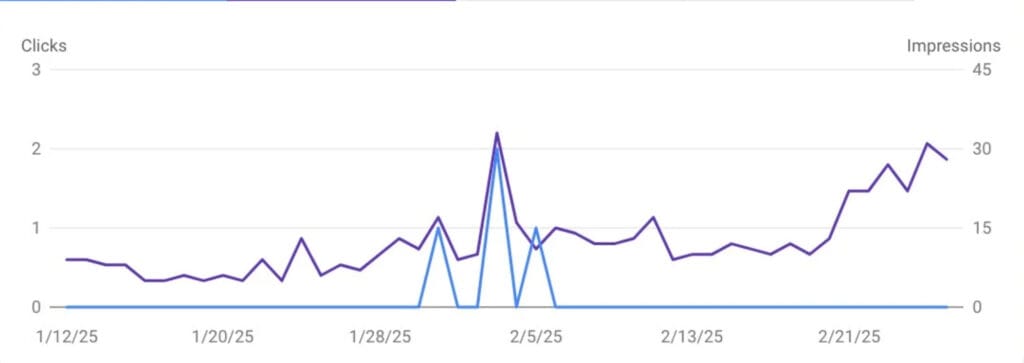
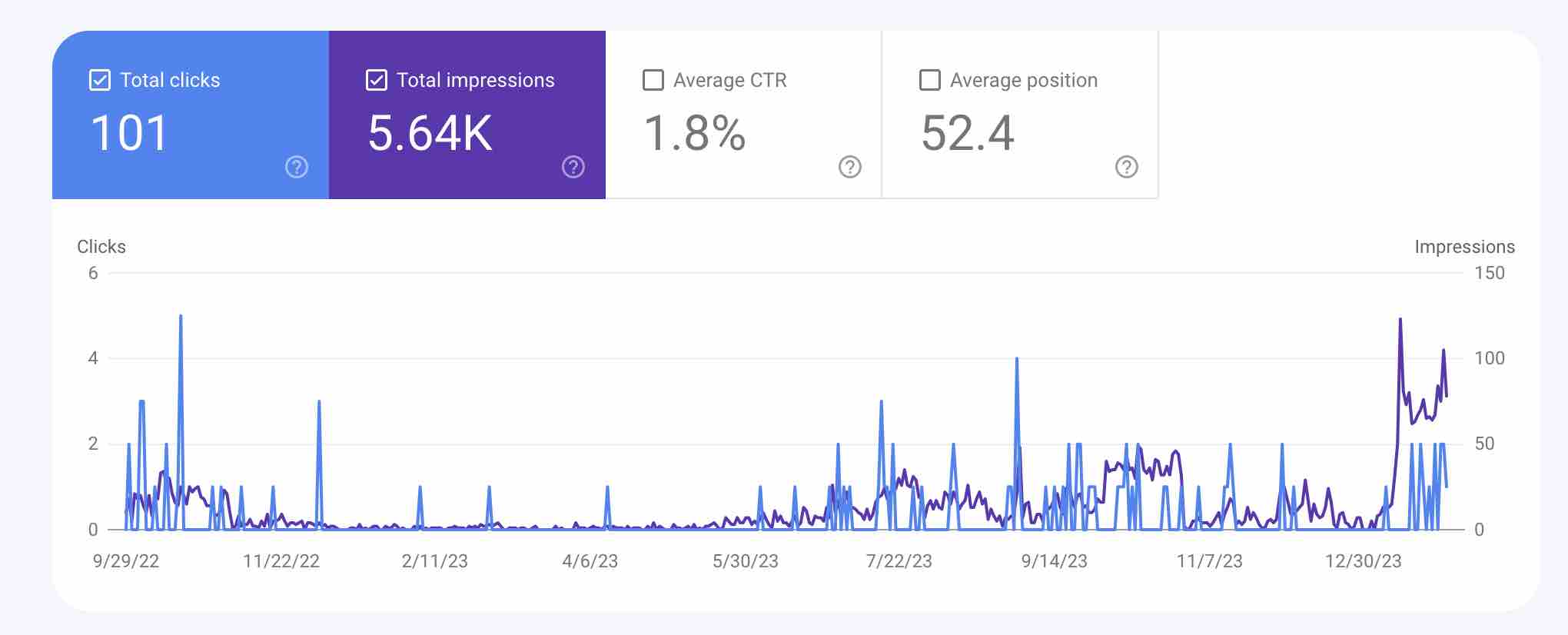
This Squarespace therapy website was first created last 2022 and when I first audited it, below was the first 3-month lookback that we had when we first reconnected the website to its Google Searh Console account.
If we look at its Impressions, this means that the website is showing up for only 5-6 times a day and people are clicking on it for none to at least once a day.
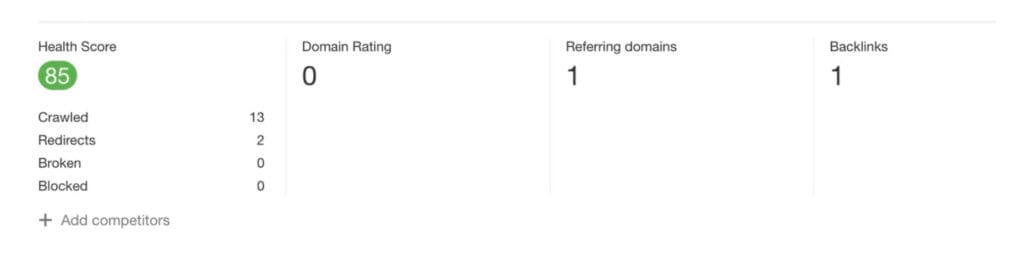
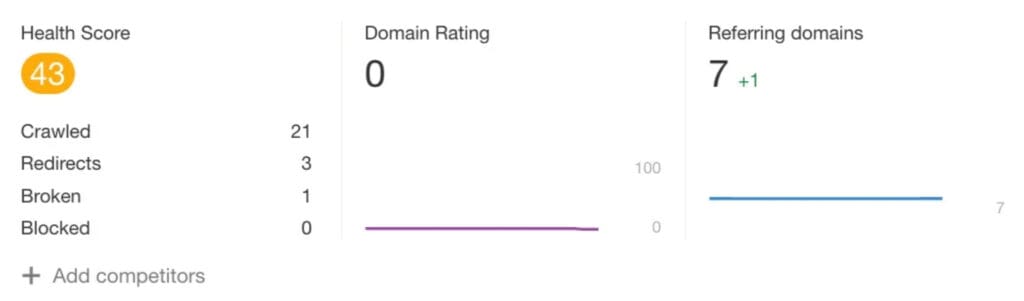
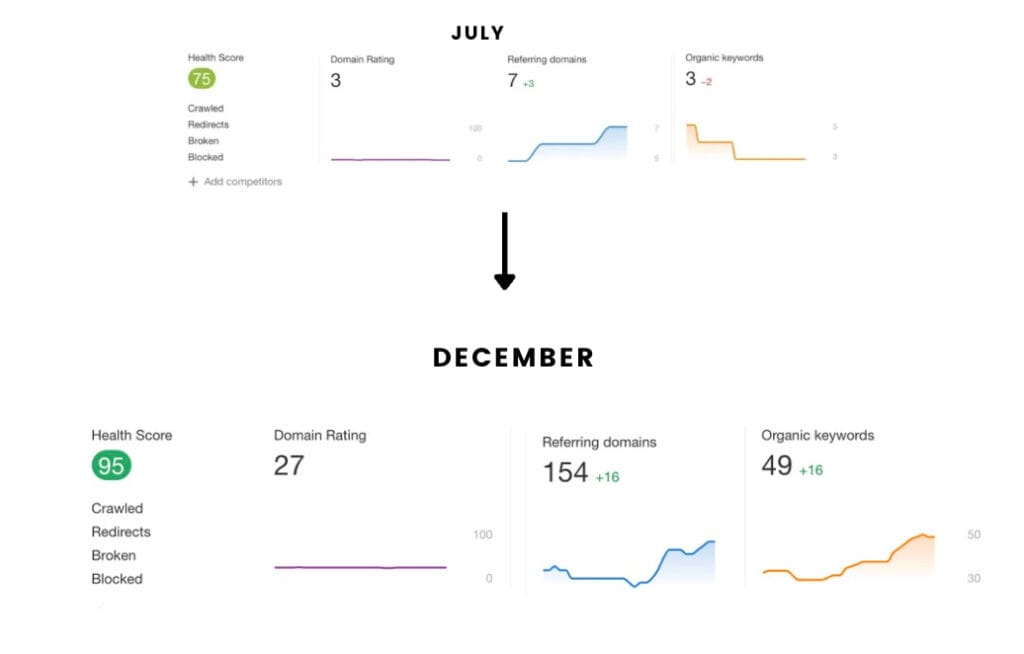
Below is the website’s other metrics. Its Health Score means that it can further improve its structure; and looking at its Domain Rating and Referring Domains/Backlinks means that it needs to improve its reputation by acquiring quality links from reputable websites.
This aged website clearly needs technical, on-page, off-page and content strategy for it to rank in a span of 6 months.
The Solution
Recommendations to get things moving
I recommended the following for the website:
Creation of a number of service page and location pages The website did not have any individual service pages so we have to create one for each service that she offers.
Keyword research for future blogs to support the new service pages and touch client pain points I could say that aged websites are what I usually call, ripe for the picking. It’s common knowledge that Google has more confidence and trust on aged websites than new websites so keyword-guided content for aged websites can help increase chances of ranking better than before.
Technical optimizations and keyword targeting for current pages. I usually do this as the first step for every website that I handle.
A simple offpage strategy was done to make sure that the website gets enough reputation to help the new content rank with the targeted keywords for the services. Before the new pages were published, I first made sure that the website has enough reputation.
This usually happens at around second to the third month, this is also the reason why I usually recommend publishing only during the end of second or mid of the third month.
The Result
A comparison of 6 months before and after the SEO implementation
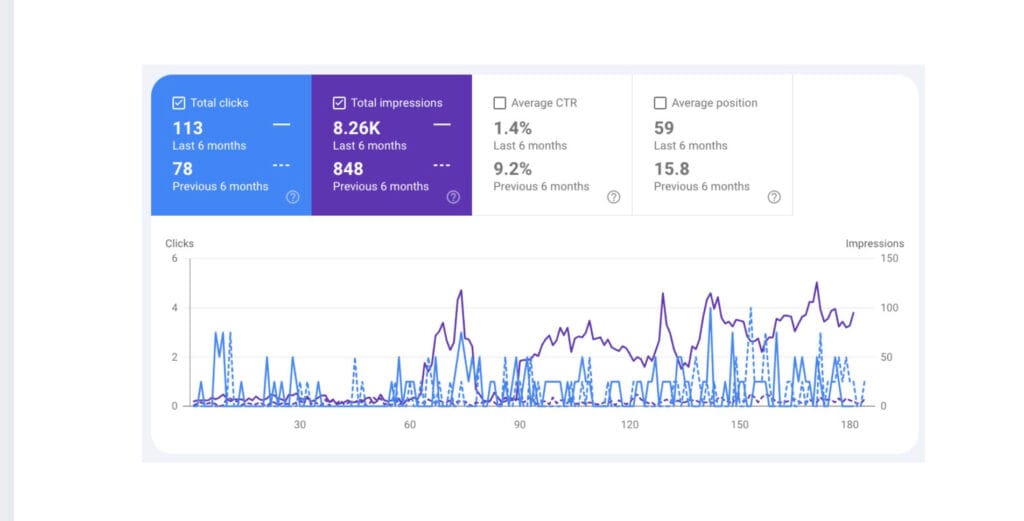
Below shows the difference in Clicks and Impressions during the 6 months implementation (upper metrics or Last 6 Months) and before the implementation (lower metrics or Previous 6 Months).
Significant Visibility Improvement: The Google Search Console data clearly shows a substantial increase in website impressions compared to the previous six months without SEO optimizations. This rise indicates that the site is now appearing for a broader range of search terms, keywords, and queries entered by users.
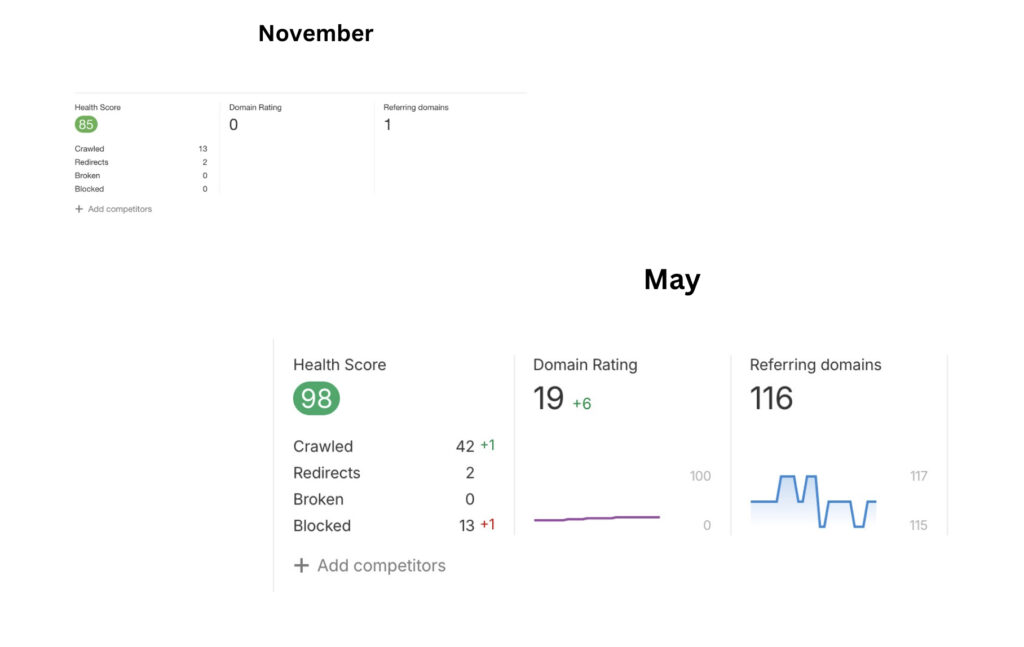
Increase in Topic Authority: The acquisition of high-quality off-page backlinks has significantly contributed to enhancing the website’s overall topic authority. These links originate from reputable, niche-relevant websites that are closely aligned with the client’s industry or subject matter.
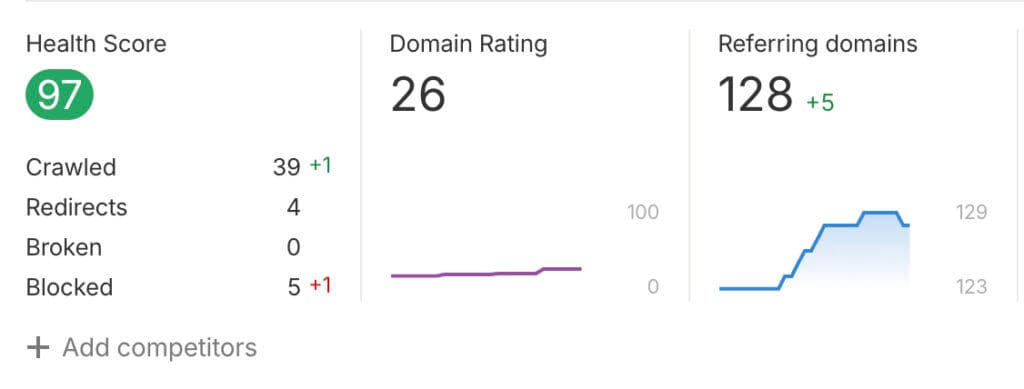
As a result, the client’s site benefits from improved Domain Rating (DR), a key metric used to assess a website’s backlink profile strength. These contextually relevant backlinks not only help build trust in the eyes of search engines but also reinforce the website’s topical expertise, making it more likely to rank higher for relevant search queries.
Improved Site Health: The website’s technical and structural integrity has been markedly improved through a comprehensive audit and subsequent optimization process.
This includes resolving issues related to faulty or broken redirects, enhancing internal linking to improve crawlability and user navigation, and correcting content formatting to ensure consistency and readability.
In addition, proactive measures have been put in place to ensure that all existing and future URLs are optimized for search engine indexing and crawling. This holistic approach to technical SEO strengthens the website’s foundation, leading to better user experience and improved performance in organic search results.
This case study show typical 6-month SEO results for aged website which are “ripe for the picking”.
If you’ve worked with a few SEO experts before but still haven’t seen real improvements after six months or more, it might be because the real problems with your website haven’t been fully understood or fixed.
Sometimes, people focus on the wrong things or just scratch the surface. To get results that last, your site might need a more thoughtful, personalized approach that really gets to the heart of what’s holding it back.
Frequently Asked Questions
Can you do the same for my website?
Yes I can create a strategy for you that is customized for your website need and target outcome. Implementation time may vary in time depending on your budget and results are also variable due to the different competitiveness of different business niches.
I did everything for their Squarespace website from initial audit, monitoring, on page, and technical SEO optimizations , keyword research, and content strategy.
The content creation was done by their writer guided by my keyword research.
A new website (created less than a year) is considered harder to rank than aged websites.
So if you availed an SEO campaign for your new site, here are some typical results you may get. I usually update my SEO case studies months or a year after.
SEO is a long game, it does not bring instant results. It is therefore best if your first SEO campaign makes sure that your new website is ready for creation of additional content, and upcoming algorithm changes.
The Result
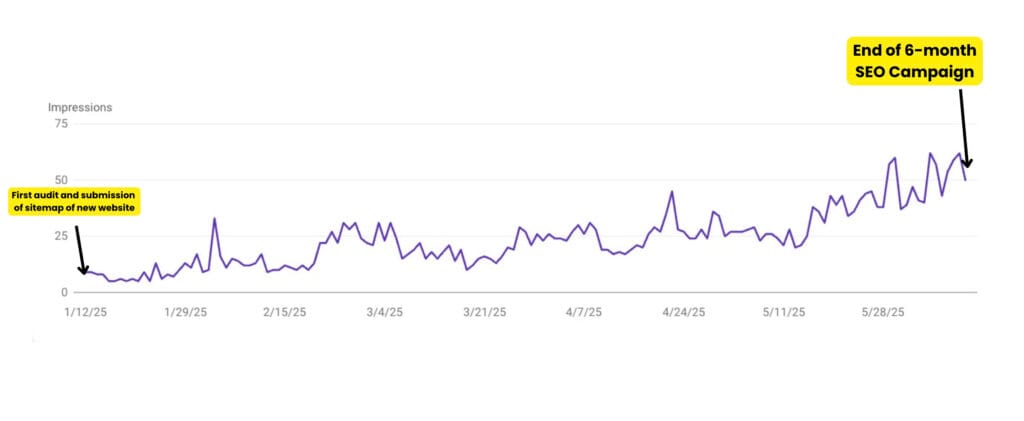
We’re into the 6th month of the campaign for this Squarespace website and we can say that we have greatly improved the site’s visibility by basing on the the following metrics:
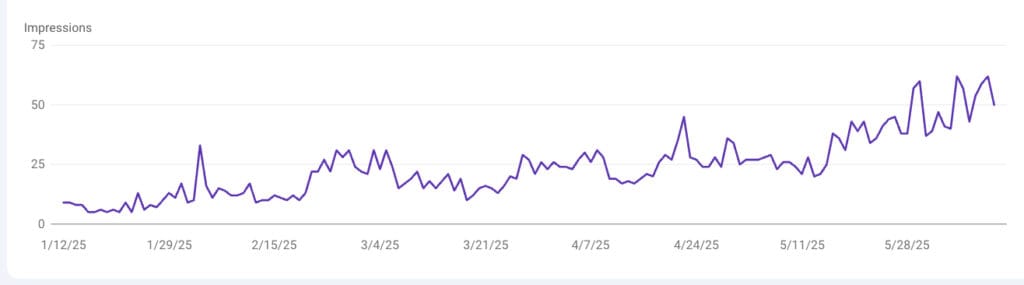
Impressions How frequent they show up on Google Search when a user searches a term
January 2025
10-30 Impressions
June 2025
20-50 Impressions
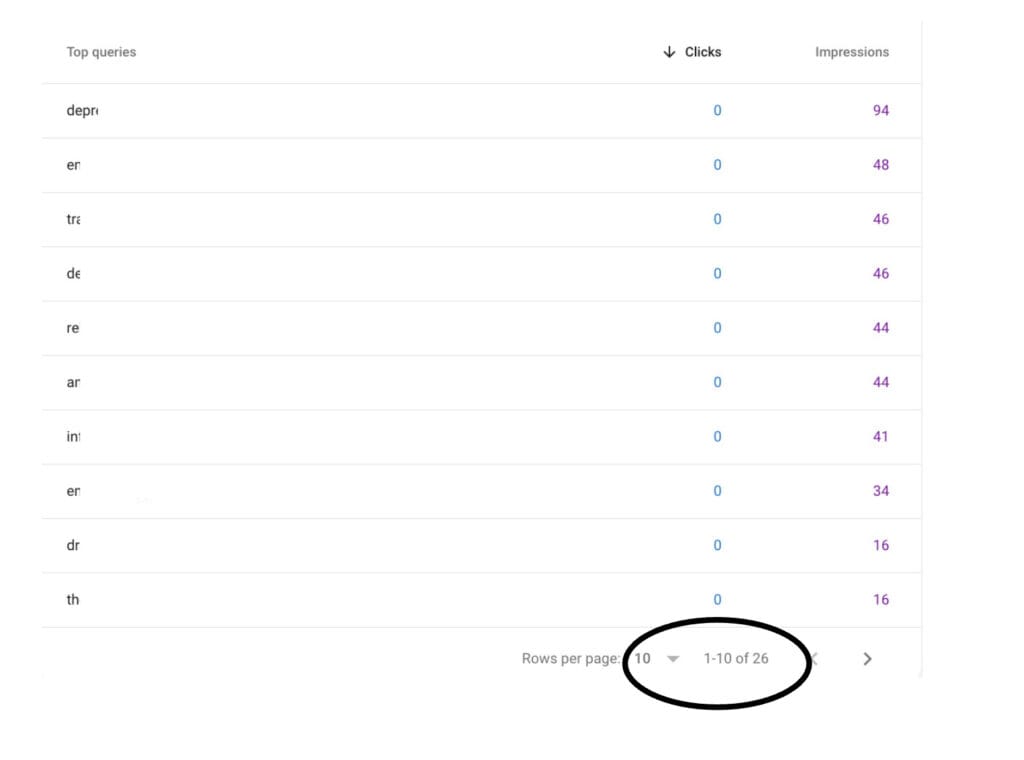
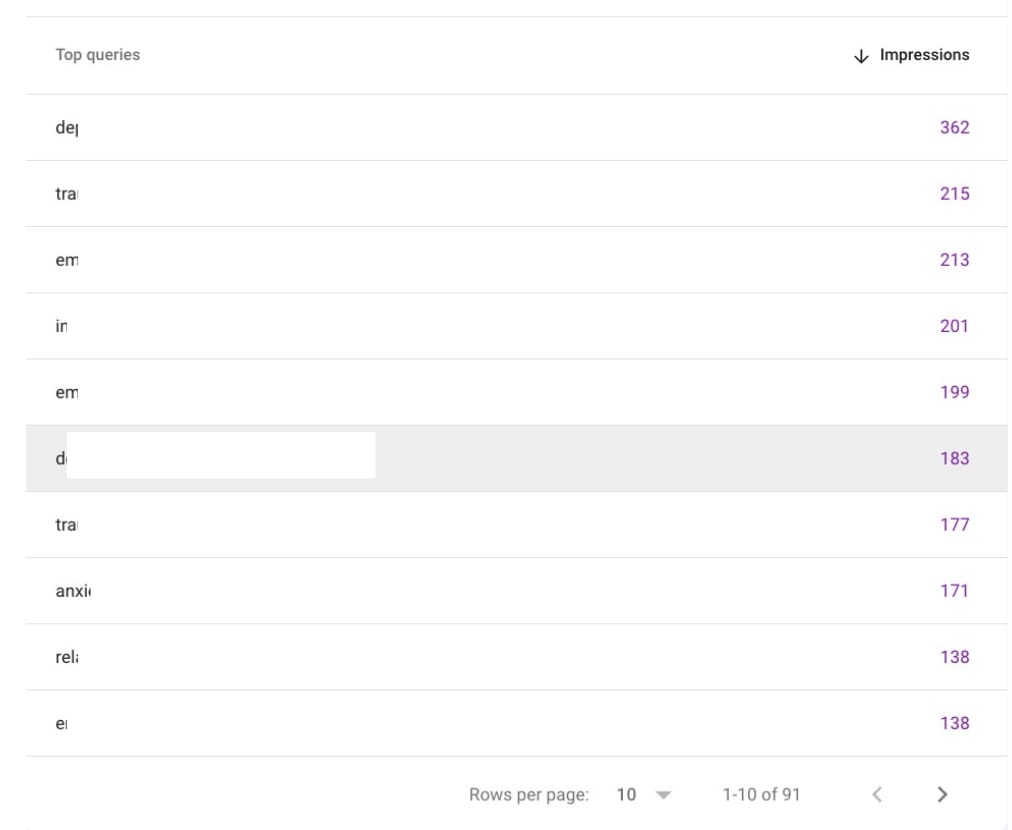
GSC Queries Search terms they are showing up for when a user searches a term on Google
February 2025 (Sitemap was only submitted after first audit so January had no data)
Started with 26 Queries
June 2025
91 Queries after 6 Months
Other Site Metrics
Site Health: Soundness of web structure
Domain Rating: How trusted a website is according to their niche/topic
Referring Domains/Backlinks: How many other websites are linking/pointing to their site
January 2025
10-30 Impressions
June 2025
20-50 Impressions
This is a typical result that you can get from 6 months of SEO Campaign for a new website (website is less than a year old when campaign was started.)
Here’s what the results mean for a new website:
Website is now structurally sound and ready for implementation of new pages and blogs
Impressions show that the website is now getting organic and relevant traffic from targeted topics searched for by prospect clients.
The website now has relevant reputation to write about the topics and niche that it targets thus helping it to rank better.
The Challenge
A Squarespace website first created in 2024
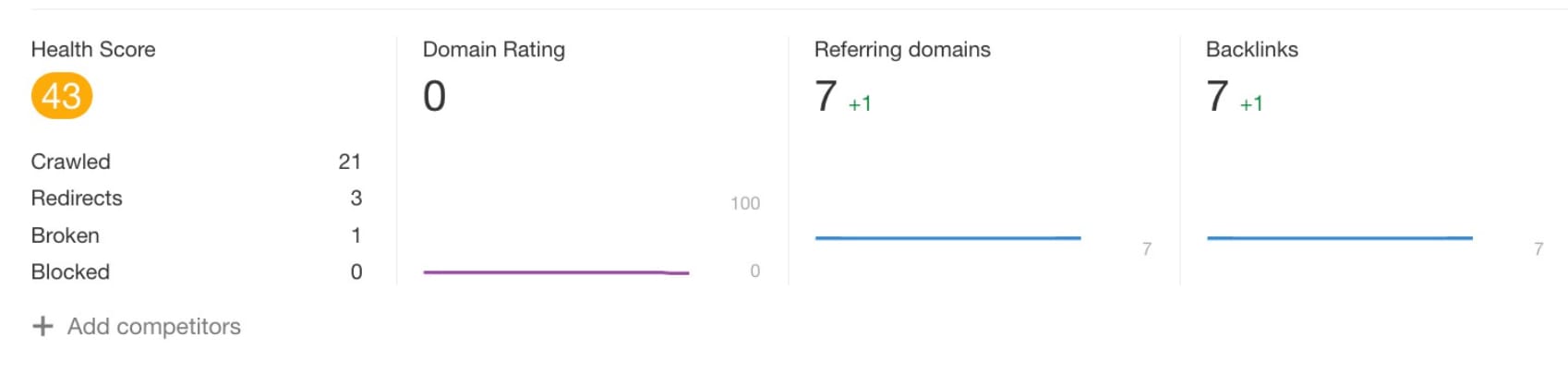
My client had their Squarespace website created since June 2024 but when I first audited it it had the following metrics:
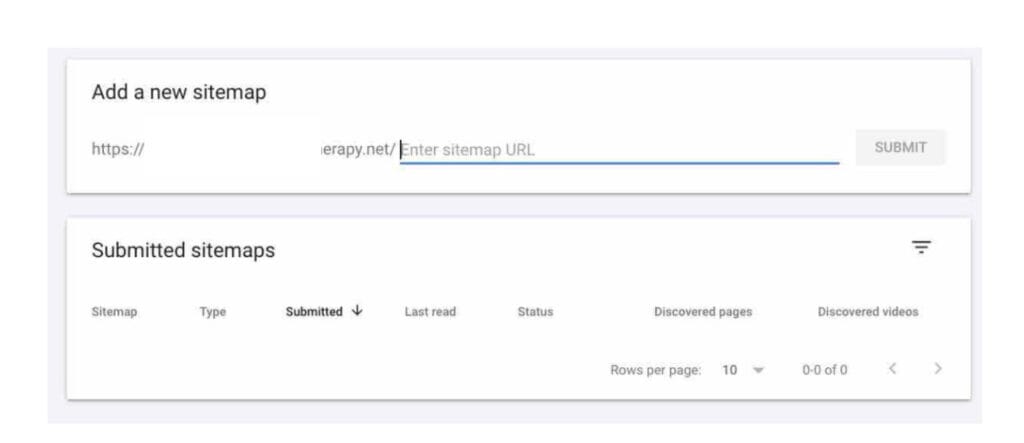
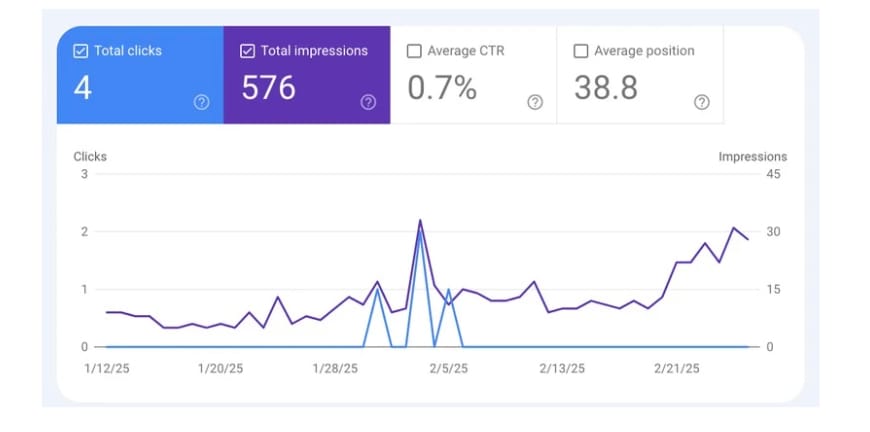
I also looked into their Google Search Console (GSC) to get a good view of what the website was like in about 6 months after it was created. But as most new websites, they seem to not have their sitemap submitted yet so that was the first thing I did after the audit (first audit was January 2025).
Since this is a typical scenario of new websites, the only data we’ll have of its baseline performance is the GSC data that we’ll have in a few months before we implement the new content for the site.
The Solution
A strategy for exisiting service pages and needing to target two locations
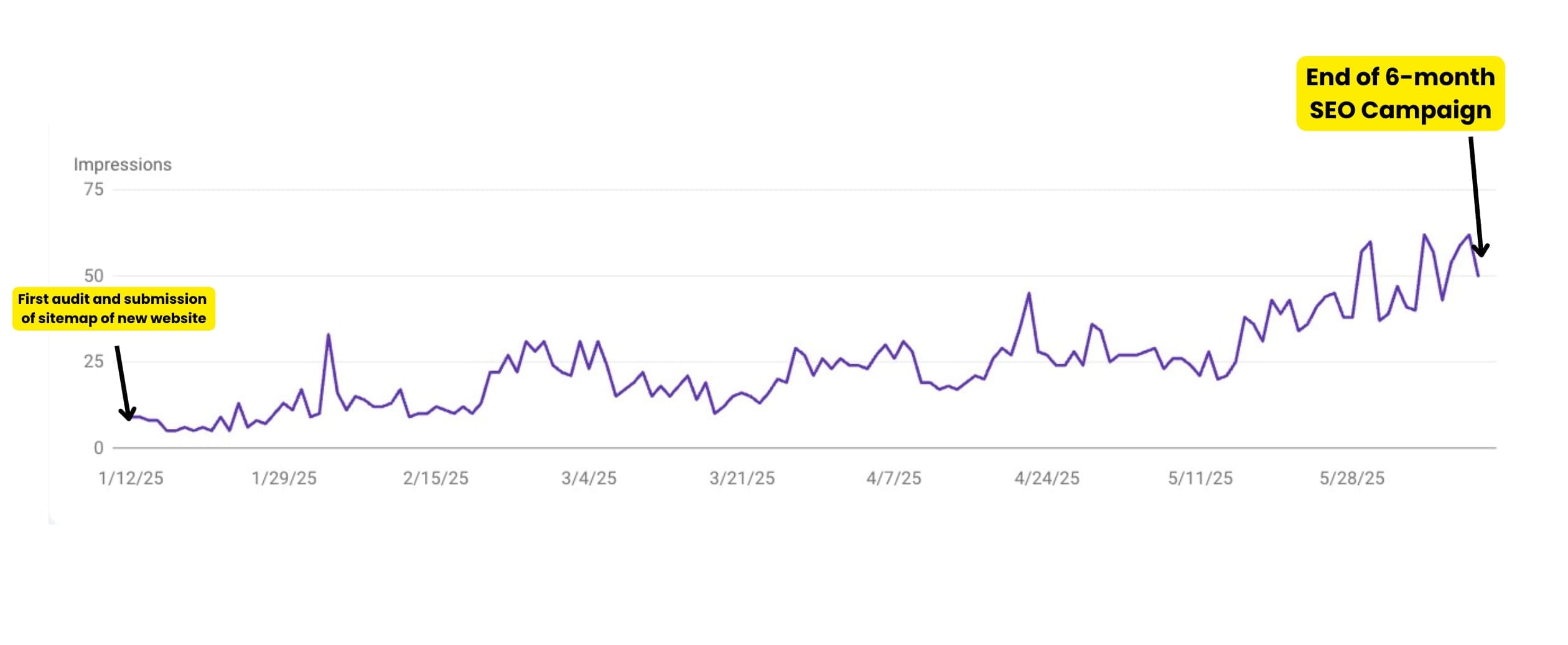
Below are the recorded metrics of the website on the second month (February 2025) which served as the base metrics for this case study.
Metrics by February 2025
Base number of queries was 26 (of the number of search terms/keywords it was showing up for)
The Impressions (violet line) noted from the site was at first from less than 10-20 but since off page links were created after submission of sitemap (January) it had a typical effect of increasing impressions after a month.
Below were just some of my recommendations for the site:
Acquisition of off page links to increase topic authority before publishing other pages.
This is my usual recommendation for new websites (or those website that are less than a year old, and those website with not much content and quality backlinks)
Keyword Realignment, On page and Technical SEO adjustments for existing and upcoming pages
This is a typical inclusion for all SEO campaigns.
Creation of targeted supporting landing pages to supplement its existing service pages
The website already had service pages but since it was a difficult and focused niche its service pages had to have supporting pages that can give relevancy to it since keyword research showwed that the services offered had no keyword traffic for it so relevant pages that can be related to it were created.
Each of the supporting landing pages above had two versions that are uniquely created to target two different states.
The website was targeting two states for its therapy services, so two versions of each supporting landing page was created since keyword research showed that both the two locations had traffic for the same keywords in the supporting pages.
For example:
Couples counseling in Hollywood Couples counseling in Philadelphia
The website had an existing service page with the keyword “couples therapy” so we created two unique versions that targets the same supporting keyword (couples counseling) while also making sure that the two locations are targeted.
This case study is a good example on what to expect for the first 6 months for a new website. The best you need to expect is an increase in visibility or impressions.
Read more on my other case studies and see how the other websites I’ve handled continued to improve without other SEO intervention and while only taking my SEO retainer services after the main 6 months campaign.
What to do after the first 6 months campaign
These recommendations are for new websites who has availed 6 months of SEO services and has achieved the above sample results:
Make sure that new blogs are optimized before publishing. I make sure to give my clients some points on how to publish new blogs using the templates that I give them after my services.
Make sure that any new service or landing pages to be created uses the sample template as deployed on their website. This makes sure that the website is structurally consistent and optimized for Google crawlers.
Make sure that new pages or blogs published are guided by keyword research. I make sure that my clients has a list of keywords that they can use for blog writing on their own after our SEO services. Usually they can avail my keyword research services or resort to customized retainer services after the main SEO campaign.
Frequently Asked Questions
Can you do the same for my website?
Yes I can create a strategy for you that is customized for your website need and target outcome. Implementation time may vary in time depending on your budget and results are also variable due to the different competitiveness of different business niches.
This therapist website has been on the space for 4 years and it was only after our SEO campaign that they were able to improve their visibility and they were able to maintain the momentum I created for them by continuously publishing targeted content.
If you’re not a new website and you’re struggling to rank, this is almost what it’s like when you get the basic SEO optimization.
My SEO services makes sure that not only will you rank even after my campaign has ended, but you can also sustain the momentum and metric gained as long as you create quality content.
Continuous Improvements After the SEO Campaign
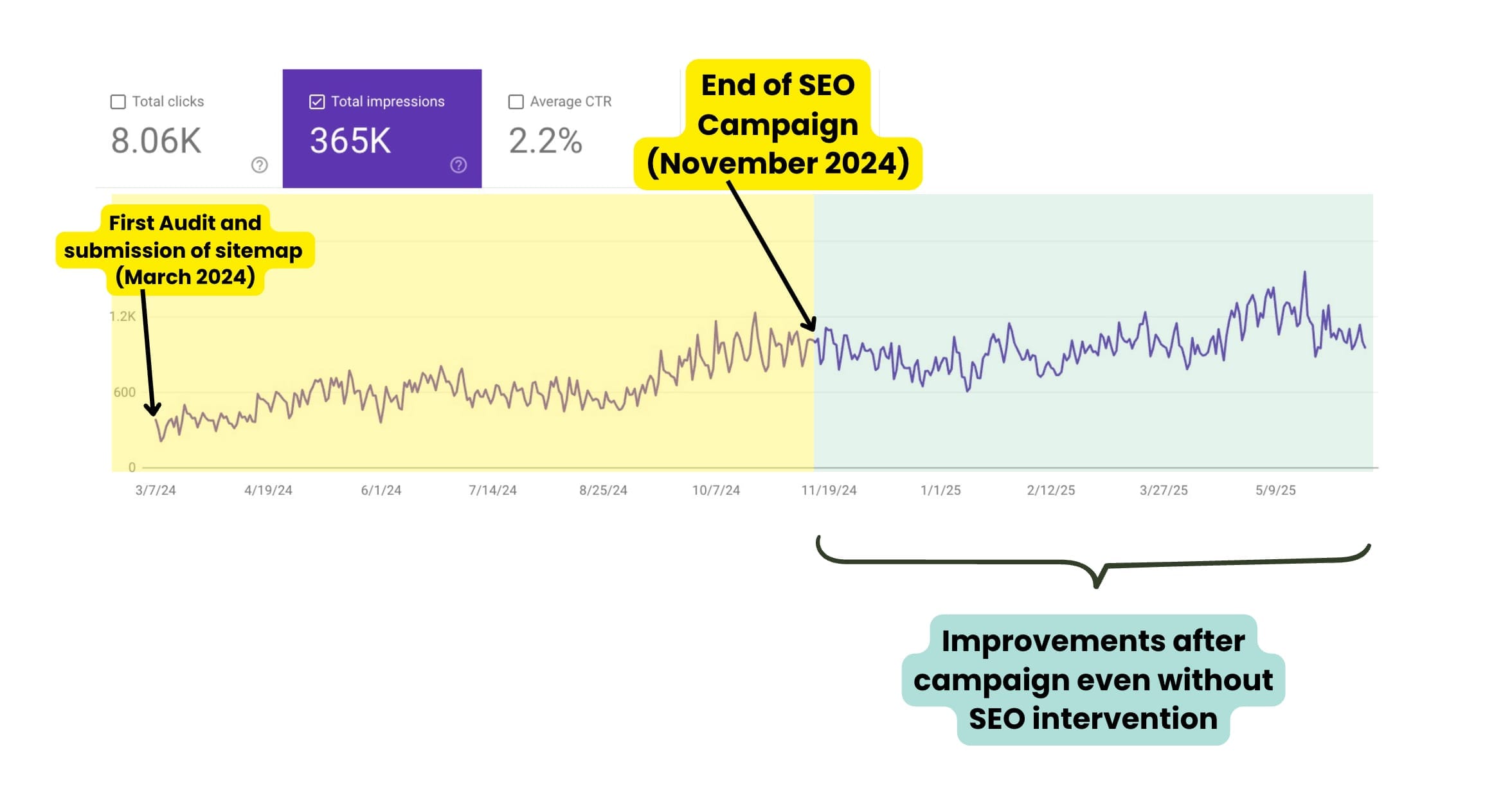
And just before we dive into the details here’s an update of the site’s performance months after the end of the campaign.
While they did not avail of the SEO retainer services, the website was able to continuously improve its visibility with the help of continuous content creation and optimization (guided by the video guides I gave on the last SEO report).
The Challenge
A Squarespace Website Created in 2020 strugging with visibility
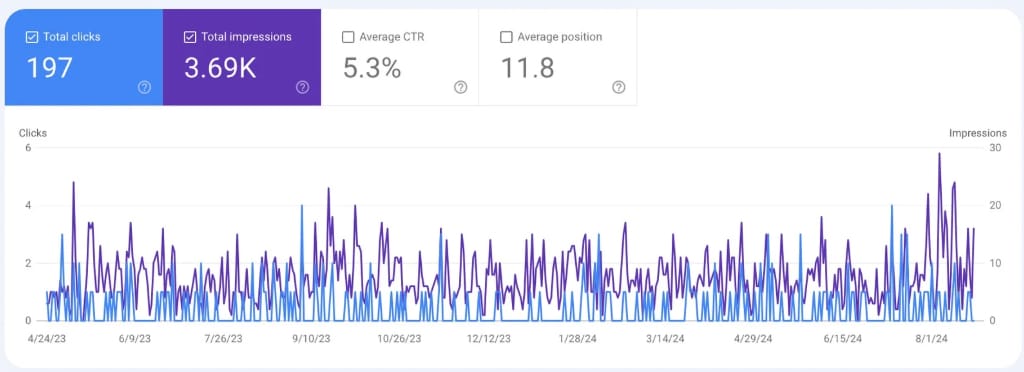
This Squarespace therapy website was first created last 2020 and when I first audited it, I looked at the 16-month lookback and saw that it only had about 3690+ impression during that month range which can translate into like just almost like 7-8 impressions in a day (image below).
Initial 16-month lookback and metrics audit
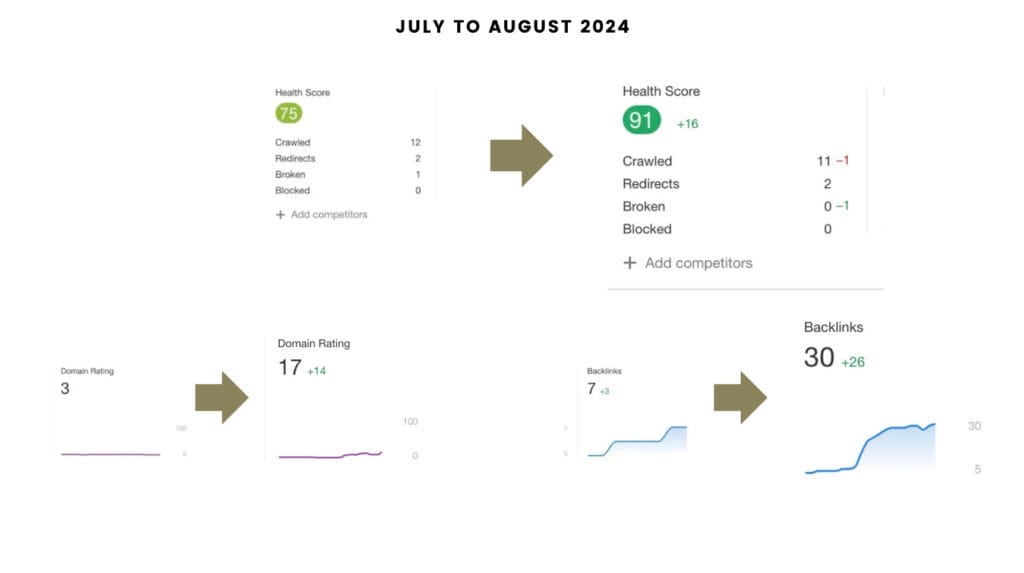
The following is the website’s metrics just before I started implementing my strategy.
The website clearly needed technical, on-page, off-page and content strategy for it to rank in the span of 6 months.
The Solution
Focusing on low-hanging wins to move the needle
When on the first month, a few technical, on page and off page strategies were implemented on the site that gave a few nudges to help the site’s initial metrics.
Below are some of my recommendations for the site to make sure that the website is able to rank even after the campaign:
Creation of additional service page and location pages This was done to help the site create more visibility for her target customers and accumulate content and relevancy for their target location.
Keyword research for blog posts to target client pain points This is mostly one for the things that gives the best result to help funnel the right clients that are looking for the therapist services. We made sure to create and schedule one blog for them four months since the first and second month content were consumed by the creation of service and location pages.
Technical optimizations and keyword targeting were done to the website’s existing and new pages to make sure that exisiting structure and each content published during our campaign are aligned towards the goal of ranking the right keywords.
A simple offpage strategy was created to make sure that the website has enough reputation to help the new content rank with the targeted keywords for the services.
Templated pages for easy SEO implementation after the campaign. Since my SEO strategy is mostly about making a new website easily sustainable for clients, I made sure that they had templated location and blog pages that they can tweak and customize if they plan to continue publishing after our campaign.
Video guides are included and are downloadable in the last SEO report to make sure that they can save details on how to maintain the SEO optimizations done on the site.
The second and third month involved content creation and approval process so that we could start pushing the content on the last week of the second month.
The Result
Finally Visible
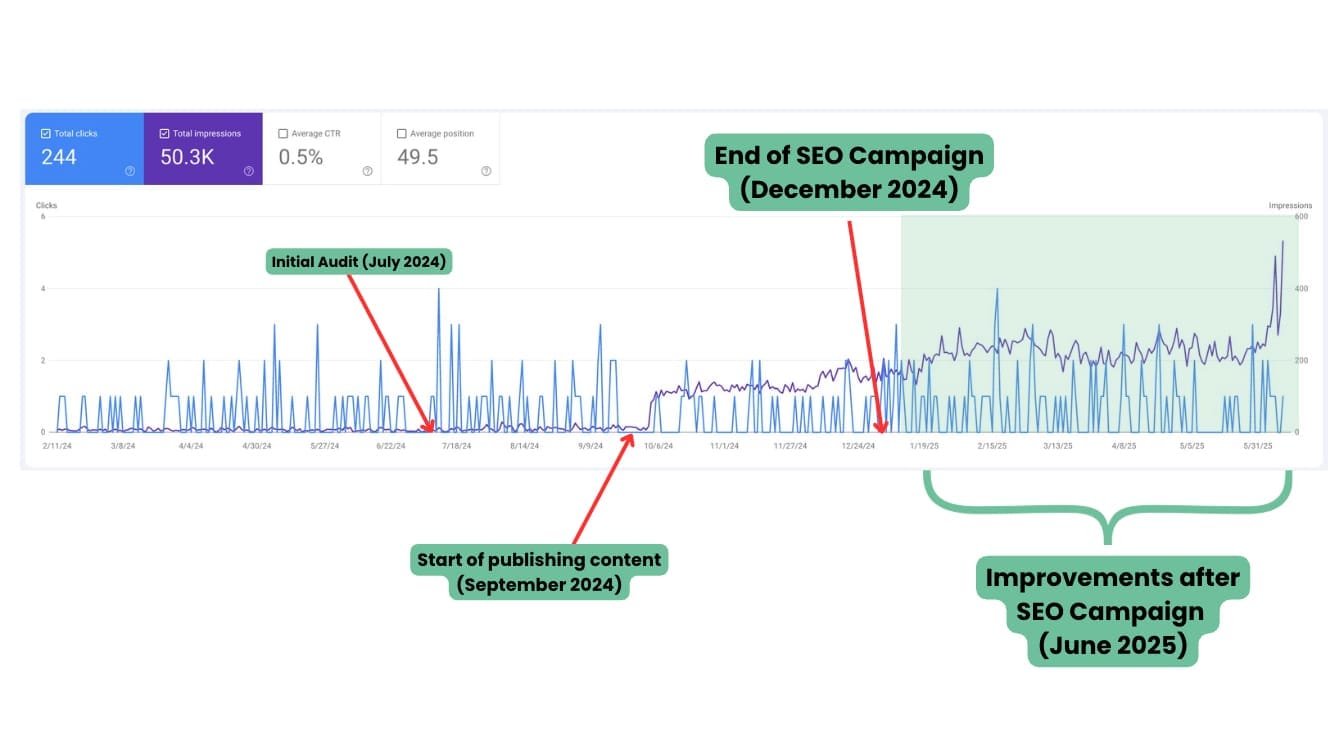
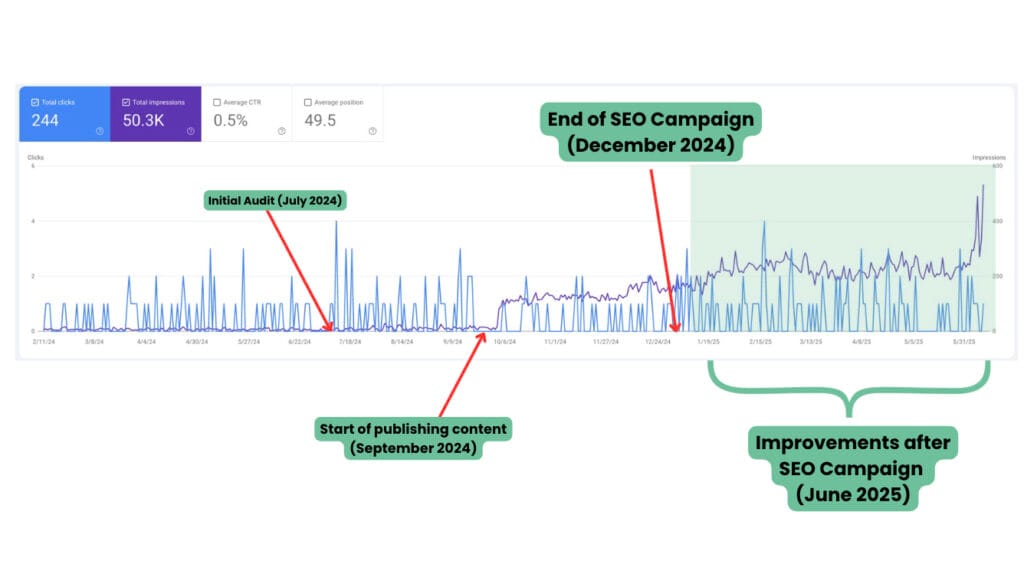
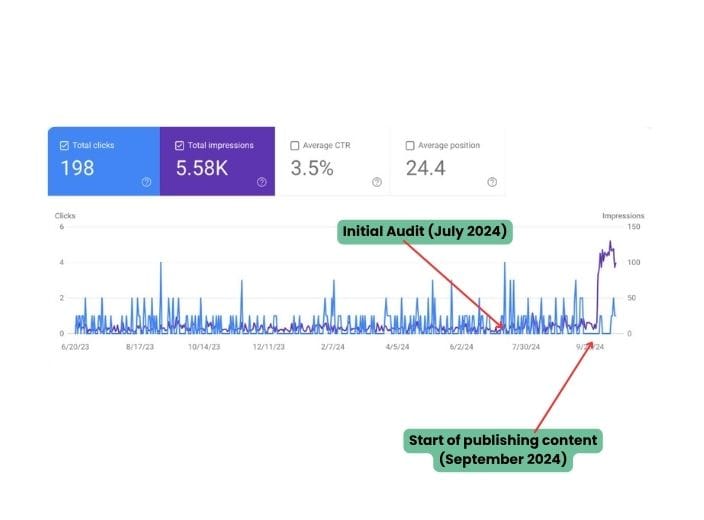
Improvement in impressions were seen by mid September. This was driven by the optimized new service pages, keyword realignment on the existiing pages and topic authority gained from the backlinks acquired.
By the end of the campaign (December 2024), we were able to significantly increase the website’s visibility for their brand name, services and location.
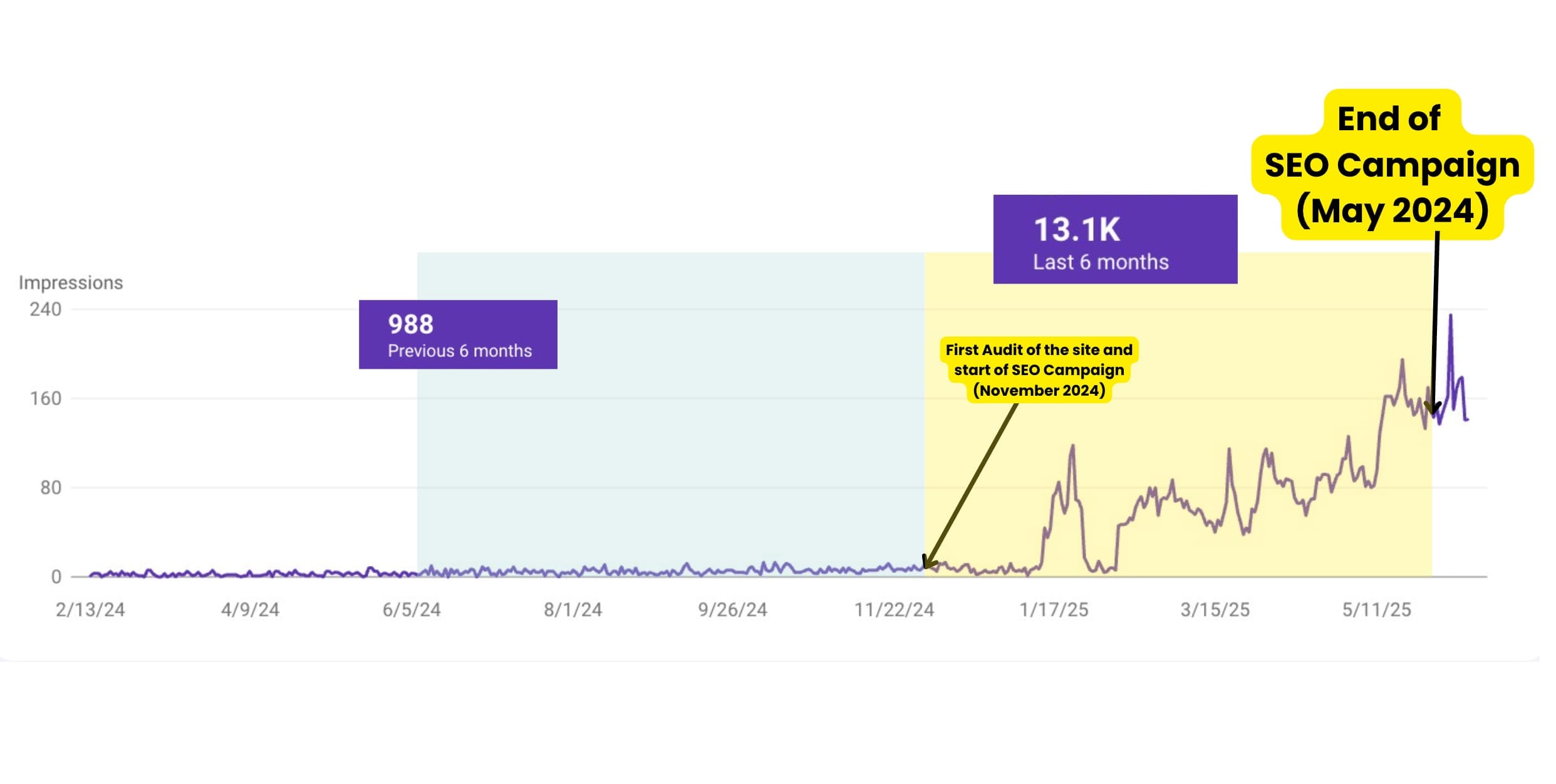
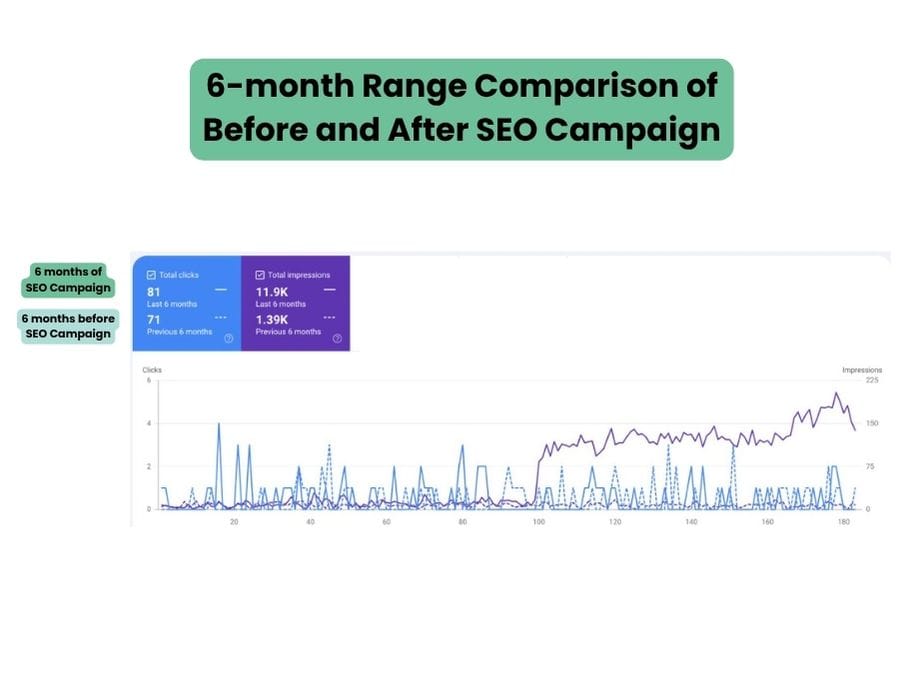
Below is a 6-month range comparison of the before and after the SEO campaign and difference in site metrics that we recorded.
Great Improvement in Visibility: You can clearly see from the GSC data above that impressions greatly increased as compared from the previous 6 months without SEO optimizations. This increase in impressions is a signal that the website is now showing up for more terms/keywords/queries searched for by people .
Increase in topic authority: The off-page links acquired has helped the website increase its Domain Rating or topic relevancy coming from the other niche relevant websites that are pointing to the client’s website.
Improved site health: This is achieved by fixing technical and structural website issues. This includes fixing redirections, interlinking, content formatting and making sure that all urls and upcoming ones will be crawled and indexed.
This case study is another testimony that a website that is optimized for sustainability is better than getting optimization that only diminishes after the end of campaigns.
If you’ve have a number of SEO Specialists before and you’re struggling to get actual results in a minimum of 6 months, then maybe they are not addressing the root issues needed by your website.
Frequently Asked Questions
Can you do the same for my website?
Yes I can create a strategy for you that is customized for your website need and target outcome. Implementation time may vary in time depending on your budget and results are also variable due to the different competitiveness of different business niches.
This WordPress website was a private therapy group that opted to not create blogs.
I would usually recommend creating blogs to create initial traffic and target keywords but it is also possible to rank without blogs, but this was only possible for them because they had a different kind of fresh content that they push through once every few months.
One common thing that gets overlooked is keeping your content fresh and relevant. Search engines love updated, useful content and it’s the reason why I recommend creating blogs—and when that’s combined with smart SEO, it can really make a difference.
If your site isn’t regularly publishing new content or updating old pages, that could be one of the reasons you’re not getting the traction you want.
But how was it effective for this website?
Continuous Improvements After the SEO Campaign
And just before we dive into the details here’s an update of the site’s performance months after the end of the campaign.
Remember how my usual 6 months of SEO gets a great spike in impressions just before the end of the campaign? Well this website did not have that since they opted to not have blogs, so I devised a different strategy for them that works better for their desired post-SEO maintenance.
The Challenge
This WordPress website didn’t want blogs but they already had brand traffic yet not much for their services and target locations.
This is an aged domain/website (more than one year after creations) and was created first last 2020.
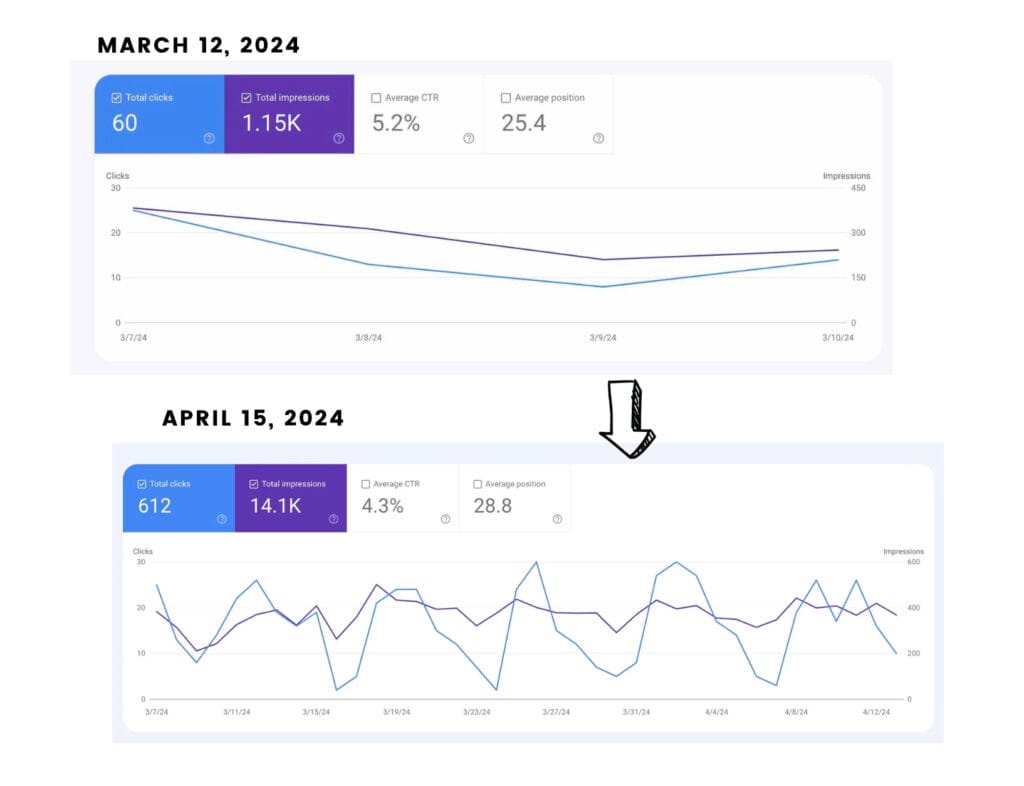
When I first audited the website last March 2024, I found out that it did not have a sitemap submitted yet on their Google Search Console, so that was the first thing I did. This is the reason now why a 16-month lookback will show the date 3/7/24.
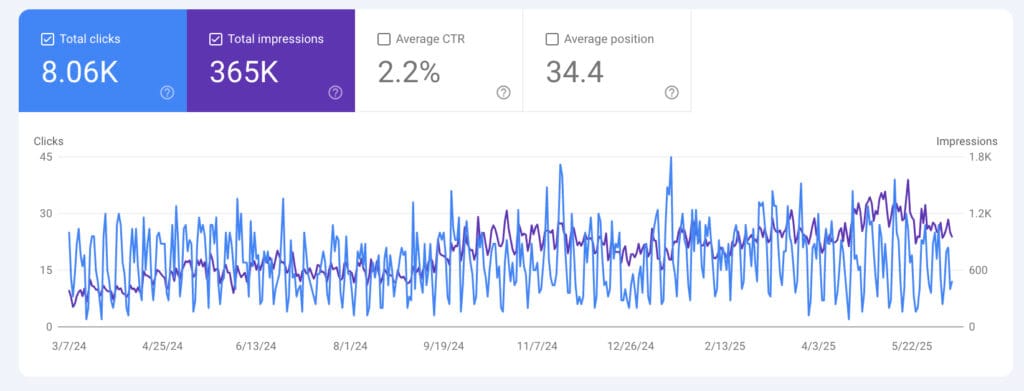
Below are the first two months of the website’s Clicks and Impressions.
You can see that the website’s Clicks and Impressions already doesn’t touch the zero-clicks/impressions in a day which means that they have already existing organic traffic that we need to build upon for improvement.
The Solution
No blogs but a lot of content creation
Usually I would recommend publishing blogs since this website already has good reputation from Google and could easily rank higher with new and fresh content. But they mentioned that blogs are unsustainable for them so I had to create a strategy that accounts for that.
Below are some of my recommendations for the site :
Creation of Specific Service Pages Initially, the website only had a general overview of their services, which limited its visibility in search results. I recommended creating dedicated pages for each individual service they offer.
This helps search engines understand the full scope of their offerings and allows each page to be optimized for relevant keywords. It also improves user experience by making it easier for potential clients to find exactly what they’re looking for.
Internal Linking Between Therapist Profiles and Service Pages The existing therapist profile pages were then to be rewritten with added details that can be interlinked to the new service pages. I suggested building strong internal links between these pages to create a clearer site structure and keyword signaling and association for the new service pages.
Adding Therapist Pages to the Sitemap The therapist profile pages were missing from the sitemap, which meant search engines might not even be aware they existed.
I made sure to include these pages in the sitemap to ensure they are properly crawled and indexed. This small step can significantly improve the chances of those pages appearing in search results.
Simple Off-Page SEO Strategy To support the site’s authority and help the new service pages rank for their targeted keywords, I implemented a basic off-page SEO strategy. This included building high-quality backlinks from relevant and reputable websites, as well as making sure the site had mentions in online directories and professional listings.
These off-site signals help build trust with search engines and improve the overall visibility of the content.
The Result
Quick Improvement in Queries and why the strategy was effective
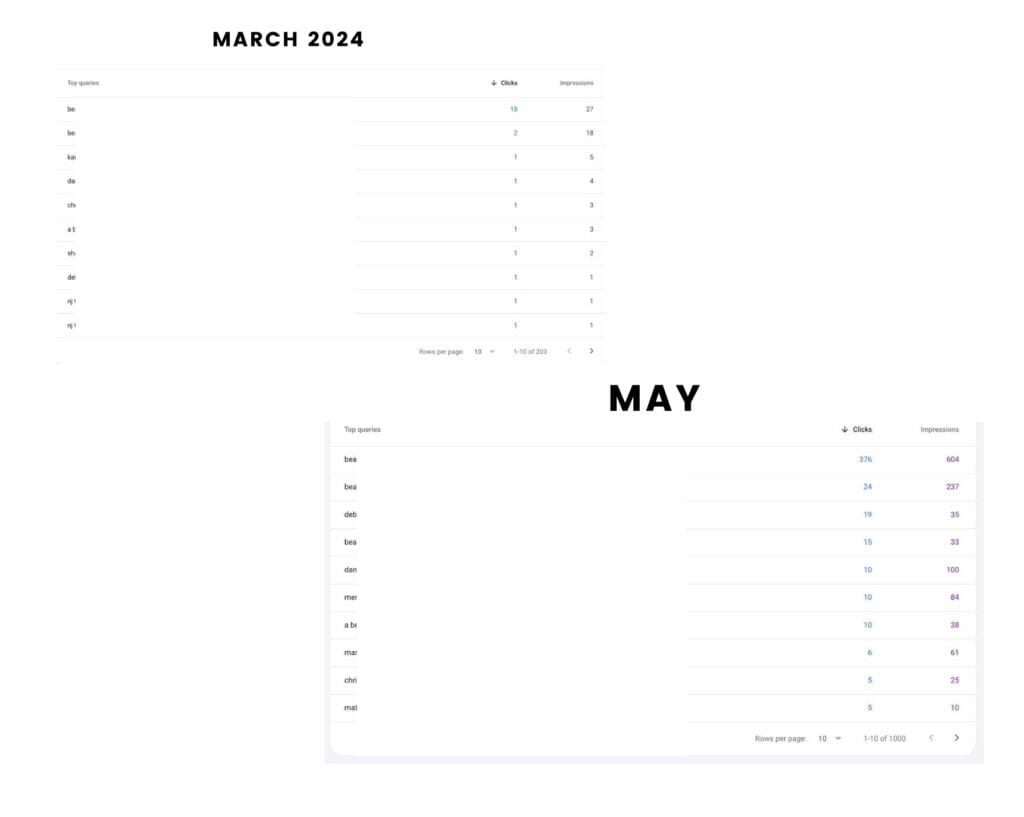
The website had a quick improvement in Queries from 203 (March 2024) to 1000 (May 2024). 1000 is the maximum Top Queries shown in Google Search Console.
Impressions (violet line) continued to improve to date as shown from below:
But how did this strategy become effective for them? This was only possible because they had more than 25 therapist profiles and they routinely add and deleted profiles, this could have given a signal to Google that they keep their content fresh.
This website could have improved more if they created a blog but what’s more important is that they have established stability and still had improvements even after the SEO services ended.
This case study is another testimony that a website that is optimized for sustainability is better than getting optimization that only diminishes after the end of campaigns.
If you’ve have a number of SEO Specialists before and you’re struggling to get actual results in a minimum of 6 months, then maybe they are not addressing the root issues needed by your website.
Yes I can create a strategy for you that is customized for your website need and target outcome. Implementation time may vary in time depending on your budget and results are also variable due to the different competitiveness of different business niches.
I’ve always been a fan of long tail keywords in SEO and my content strategy to help a domain get their first traffic traction. This is what exactly what my strategy was for an elderly care website.
This a specific strategy that works for Home Care SEO.
A home health care website struggling to gain organic traction tapped for my services and, this approach became the game-changer. Over the course of a year, a focused strategy on long-tail keywords not only boosted the site’s search engine rankings but also drove meaningful engagement and conversions.
This case study explores how targeting specific, user-focused search terms helped turn an underperforming website into a thriving online resource in a competitive niche.
The Challenge
When I first took on this project, the website was barely making a dent in the digital space.
With only 16 outdated articles, it was failing to attract traffic or engage potential clients. In the home health care industry, where families and caregivers often search for highly specific information, the site was virtually invisible.
The challenge was clear: transform this dormant platform into a dynamic, traffic-generating hub that could connect with its audience and drive real results.
Our goals for the website were ambitious but focused:
Boost Visibility with Long-Tail Keywords in SEO: Improve search engine rankings by targeting specific, less competitive phrases that matched the exact needs of the audience.
Enhance Engagement and Conversions: Create content that resonated with users, encouraging them to stay longer, explore more, and ultimately convert into leads.
Establish Thought Leadership: Position the website as a trusted authority in the home health care industry, offering valuable insights and guidance to its audience.
The Strategy
To achieve these objectives, we developed a multi-faceted SEO strategy centered around long-tail keywords in SEO. Here’s how we made it happen:
1. The Power of Long-Tail Keywords in SEO
Long-tail keywords—those longer, more specific search phrases—were the backbone of our approach. While they may have lower search volumes compared to broader terms, they often have higher conversion rates because they align closely with user intent. Here’s what we did:
In-Depth Keyword Research: We started by identifying long-tail keywords that reflected the specific concerns and questions of people searching for home health care services. For example, instead of just targeting “home health care,” we focused on phrases like that answers their queries about elderly management, and lifestyle changes.
Content Creation: Over the course of a year, we published 32 new articles, each carefully optimized for the long-tail keywords we identified. These pieces were designed to address the nuanced needs of our audience, providing practical advice, answering common questions, and offering solutions to real problems.
2. On-Site SEO Enhancements
To maximize the impact of our content, we also made several on-site optimizations:
Optimized Service Pages: We created dedicated pages for each service the company offered, ensuring they were not only search-engine-friendly but also user-friendly. Each page was tailored to answer specific questions and guide visitors toward taking action.
Strategic Interlinking: By linking related articles and service pages, we improved the site’s internal structure. This made it easier for search engines to crawl and index the site while also helping visitors find the information they needed.
Revamping Existing Content: The 16 original articles were given a complete overhaul. We updated the information, improved readability, and optimized them for the long-tail keywords we identified.
Results
The results of my efforts were nothing short of transformative. Here’s what we achieved:
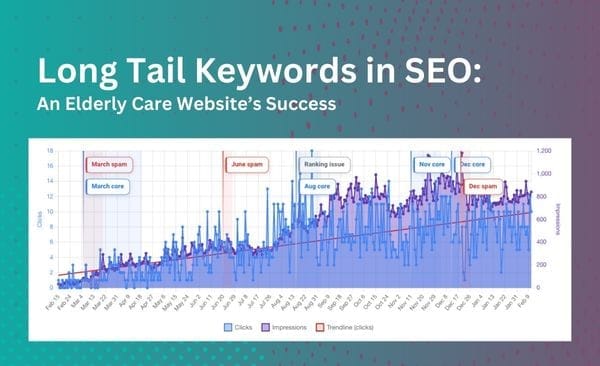
Early Traffic Gains: Within just two months of implementing my strategy, the website started to see consistent traffic. In less than 6 months, days with zero clicks became a thing of the past, and we began to see steady growth in organic clicks.
Increased Engagement: Visitors were spending more time on the site, exploring multiple pages, and engaging with the content. This was a clear sign that we were meeting their needs and providing value.
Conversion Rate Growth: By the end of the year, the website saw a60% increase in lead conversions.This was a direct result of our targeted content strategy and the improved user experience we created.
This case study is a testament to the power of long-tail keywords in SEO, especially in specialized industries like elderly health care. By focusing on the specific needs and search behaviors of their audience, the website was able to rise above the competition and establish itself as a trusted resource.
The success of this strategy wasn’t just about driving traffic—it was about creating meaningful connections with users and guiding them toward taking action. For businesses in competitive niches, this approach offers a clear roadmap for achieving sustainable growth and building a strong online presence.
In the end, the senior health care website didn’t just improve its metrics—it became a go-to destination for families and caregivers seeking reliable information and support. And that’s the true measure of success.
Why Long Tail Keywords in SEO Work
Long tail keywords in SEO work because they tap into the specific intent of users. When someone searches for “24/7 in-home care for elderly parents,” they’re not just browsing—they’re looking for a solution. By targeting these precise phrases, businesses can attract highly qualified traffic that’s more likely to convert.
For anyone looking to improve their SEO strategy, especially in a competitive niche, long-tail keywords are a powerful tool. They may require more effort in terms of research and content creation, but the results speak for themselves.
Final Thoughts
If your website is struggling to gain traction, consider the potential of long-tail keywords in SEO.
Because by understanding your audience’s specific needs and crafting content that speaks directly to them, you can unlock new levels of visibility, engagement, and growth.
I was responsible for the initial audit, strategic plan for 12 months, on page, content and technical optimization planning as they have a different team for execution.
I wrote the content for them.
Were you in charge of the setup of their Google Search Console account?
Yes, they did not have any GSC setup when I first audited the site. I also setup their Google Analytics and Google Tag accounts.
You might think that having a website is enough to attract visitors, especially if your SEO specialist is boasting about building tons of backlinks.
But here’s the thing: backlinks alone won’t cut it. Sure, they help, but their impact is minimal without high-quality content and a solid content strategy driven by keyword research.
Let’s dive into a real-life example to show you why blogs are a game-changer for your website’s success.
A Year After the SEO Campaign
And just before we dive into the details here’s an update of the site’s performance a year after.
The Challenge
A Website Struggling to Rank
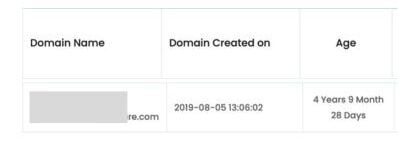
This website launched in July 2023 with high hopes of improving its online visibility. The team focused heavily on building backlinks, believing they were the key to ranking higher on search engines. At first glance, it seemed like they were on the right track.
The Data: Backlinks vs. Organic Traffic
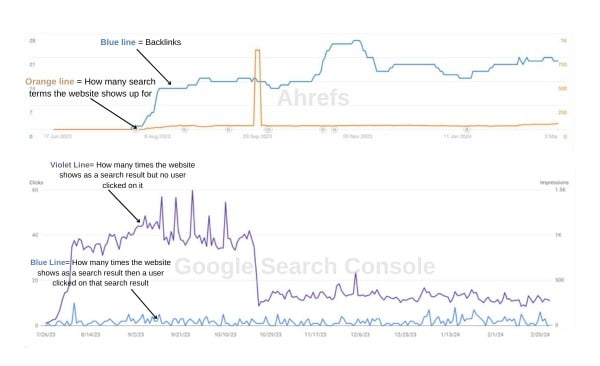
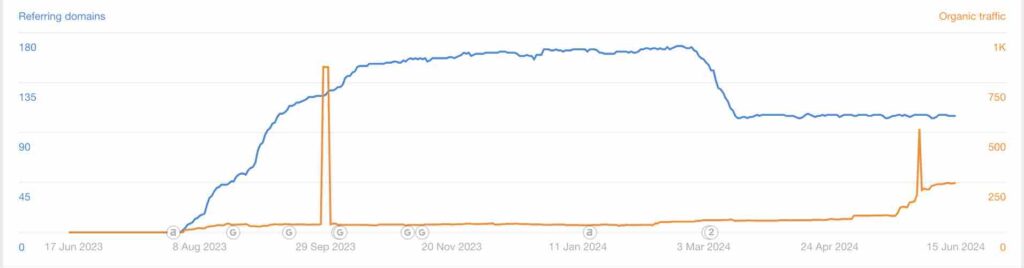
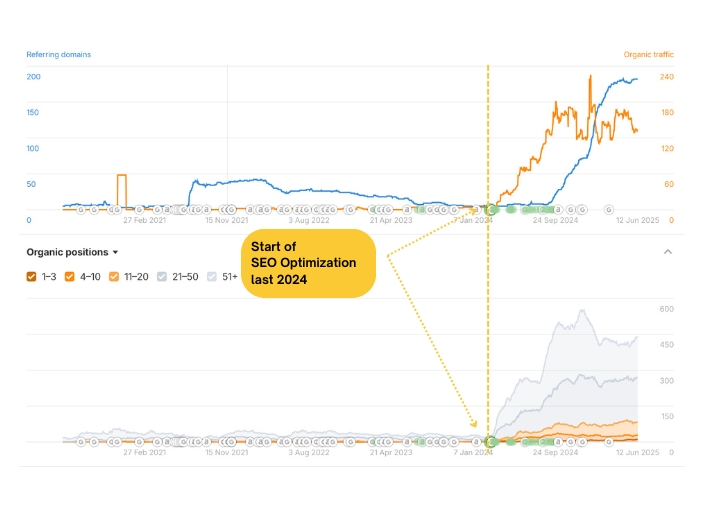
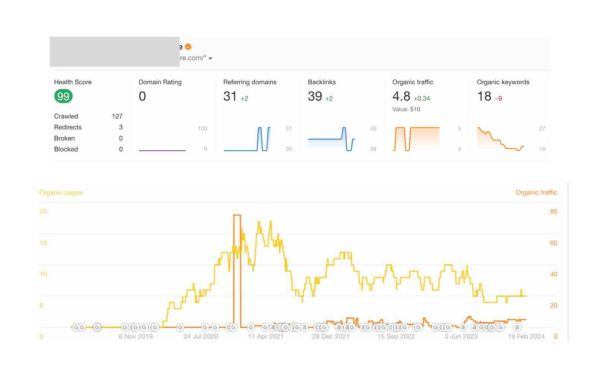
Using Ahrefs, we analyzed the website’s performance before any major changes were made. Here’s what we found:
Backlinks (Blue Line): The website had been building backlinks consistently since its launch.
Organic Keywords (Orange Line): Despite the backlinks, the website struggled to rank for relevant keywords.
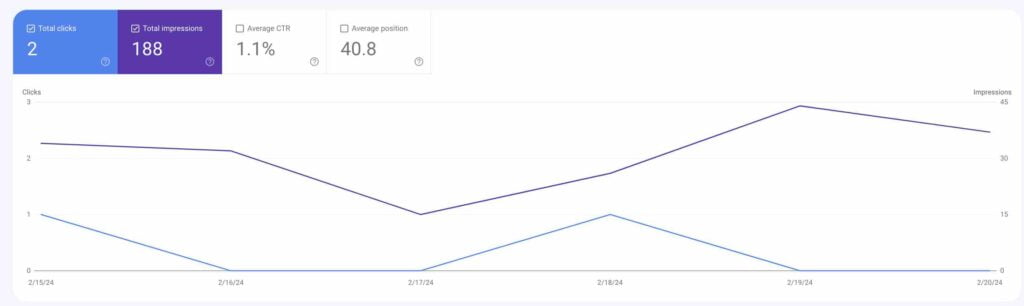
Next, we looked at the Google Search Console (GSC) metrics:
Clicks (Blue Line): This represents how often users clicked on the website after it appeared in search results.
Impressions (Violet Line): This shows how often the website appeared in search results, even if users didn’t click.
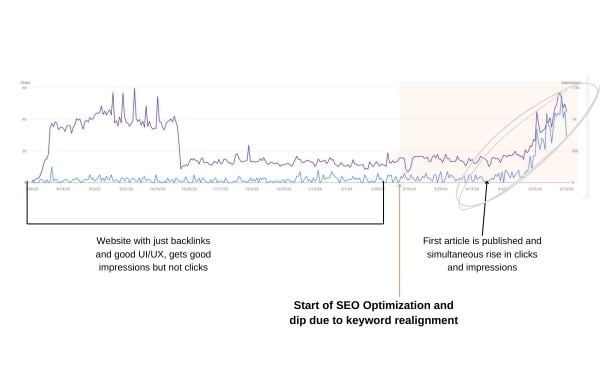
The data revealed a critical issue: while the website had a decent number of impressions (thanks to backlinks), it wasn’t translating into clicks. This meant the website wasn’t ranking for the right keywords, and users weren’t finding the content relevant enough to click on.
Interestingly, there was a brief spike in organic keywords in September 2023, but this didn’t result in a corresponding increase in clicks or impressions. This further highlighted the disconnect between backlinks and actual user engagement.
The Solution
A Holistic SEO Strategy
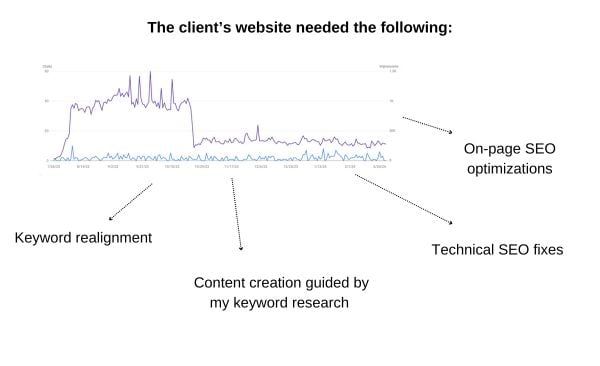
When I took over the website’s SEO in March 2024, I knew we needed a comprehensive approach.
Here’s what I proposed:
Keyword Realignment: We identified and targeted keywords that were relevant to the website’s niche and audience.
Content Creation: We developed a content strategy guided by keyword research to ensure every blog post addressed user intent.
Technical SEO Fixes: We optimized the website’s technical aspects, such as site speed, mobile responsiveness, and crawlability.
On-Page SEO: We improved meta tags, headers, and internal linking to make the website more search-engine-friendly.
The Result
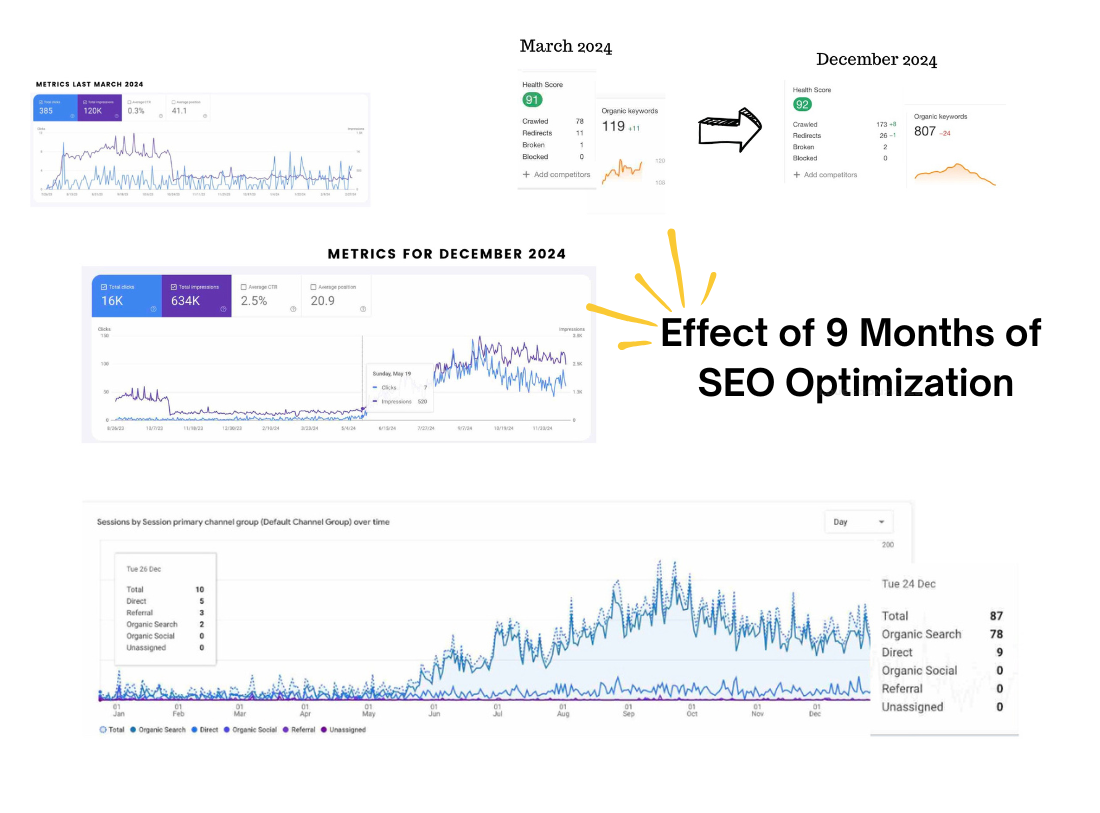
What nine months of SEO optimization without much focus on backlinks can do for your site.
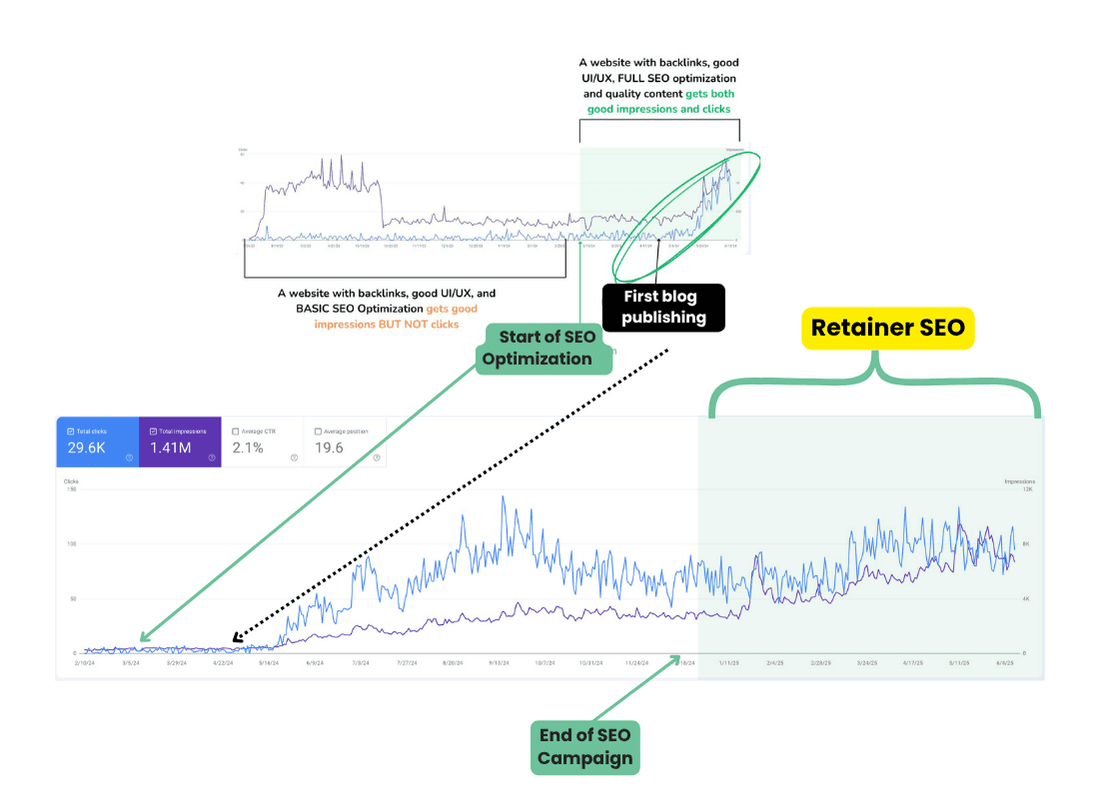
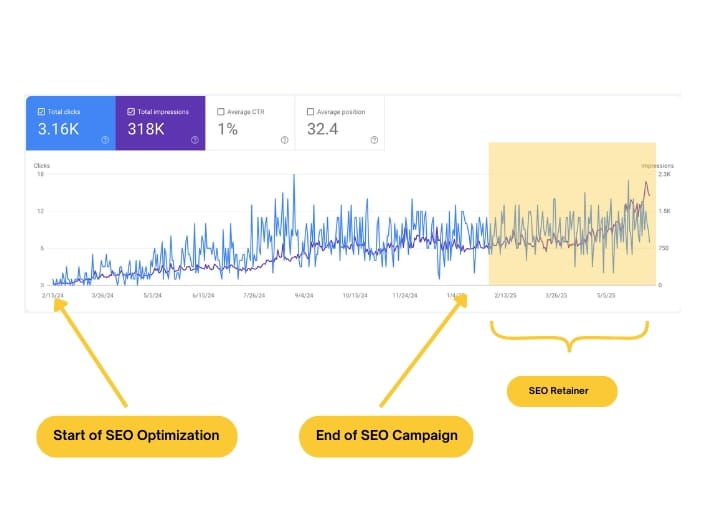
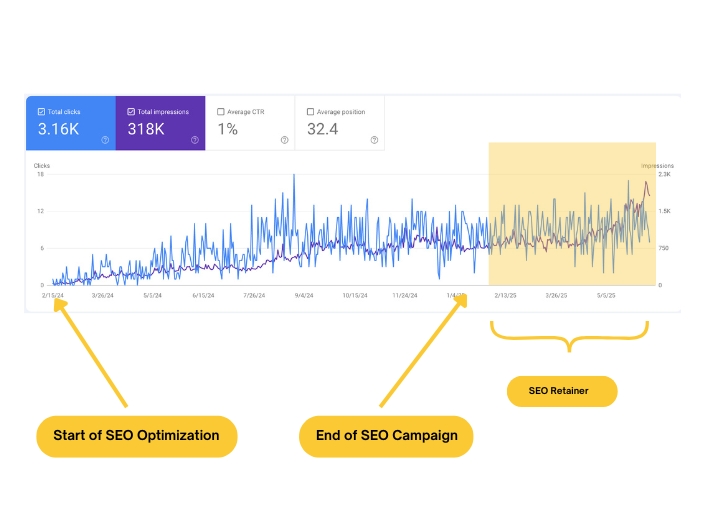
By April 29, 2024, the first blog post was published. Over the next three months, we consistently published high-quality, keyword-optimized content. The results were impressive:
Improved Keyword Rankings: The Ahrefs graph confirmed that the website was ranking for more organic keywords, driving meaningful traffic.
5 Articles Published: By June 15, 2024, the website had five new blog posts.
Increased Clicks and Impressions: The GSC graph showed a steady upward trend in both metrics, proving that the content was resonating with the target audience.
You might wonder if the increase in traffic was due to more backlinks. But the Ahrefs graph below tells a different story.
While backlinks (blue line) remained steady, it was the organic keywords—driven by quality content—that fueled the growth in organic traffic (yellow line) that corresponds to clicks and impressions.
This case study clearly demonstrates that while backlinks can boost visibility, quality content is the real driver of traffic and engagement.
You can see from the above Ahrefs graph that the website’s backlinks were definitely not the driver of clicks and impressions. It was the organic keywords that drove those, which also is a great example how having quality content is the best way to get traffic for your website than just having backlinks.
THROUGH THIS CASE STUDY, ONCE AGAIN, WE PROVED THAT QUALITY CONTENT IS A GREAT DRIVER OF TRAFFIC AND ONLINE VISIBILITY THAN BACKLINKS.
Why Blogs Are Important For Your Website
More Reasons Why Blogs Are Crucial for Your Website
Blogs aren’t just about SEO—they offer a host of benefits that can transform your website into a powerful marketing tool. Here’s why:
Engages Visitors: Blogs encourage interaction through comments, shares, and discussions, helping you build a community around your brand.
Showcases Expertise: Well-researched posts position you as an authority in your industry, earning trust from your audience.
Supports Social Media: Blogs provide shareable content for platforms like LinkedIn, Twitter, and Facebook, driving traffic from social channels.
Improves Conversion Rates: By addressing customer pain points and answering common questions, blogs guide users through the buyer’s journey.
Builds Internal Links: Blogs allow you to link to other pages on your site, improving overall SEO and user navigation.
Provides Value to Customers: Informative blogs help customers make better decisions, enhancing their satisfaction with your brand.
Generates Leads: Include CTAs in your blogs to capture leads, whether through newsletter sign-ups, free downloads, or contact forms.
Targets Long-Tail Keywords: Blogs let you rank for specific, less competitive keywords that often have higher conversion rates.
Keeps Your Audience Informed: Regular updates keep your audience in the loop about industry trends, company news, and product launches.
Enhances Brand Voice: Blogs help you develop a consistent tone and style, strengthening your brand identity.
And the list goes on—from improving user experience to supporting email marketing, blogs are a versatile tool that can elevate your website in countless ways.
Frequently Asked Questions
Can you do the same for my website?
Yes I can create a strategy for you that is customized for your website need and target outcome. Implementation time may vary in time depending on your budget and results are also variable due to the different competitiveness of different business niches.
Congratulations! You’ve put in the hard work, designed it beautifully, and filled it with content you’re proud of. But here’s the thing: just because your website is live doesn’t mean people can find it. If you’re wondering why your site isn’t showing up in Google searches, the answer might be simpler than you think—your sitemap.
In this article, we’ll dive deep into why sitemaps are crucial, how to create and submit one, and what happens if you get it wrong. Plus, I’ll share a real-life case study about the below image to show you the impact of having the right sitemap in place.
Yes, that little file you might have overlooked is actually a big deal. A sitemap is like a roadmap for search engines. It tells them where to find all the important pages, posts, and images on your site. Without it, your website is like a hidden treasure chest buried deep in the sand—no one knows it’s there, no matter how valuable it is.
By the end, you’ll have a clear understanding of how to make your website visible to search engines—and, more importantly, to your audience.
What is a Sitemap, and Why Does It Matter?
Let’s start with the basics. A sitemap is a file that lists all the pages, posts, and other content on your website. It’s essentially a directory that helps search engines like Google, Bing, and others crawl your site more efficiently. Think of it as handing over a map to a treasure hunter—it makes their job a whole lot easier.
Here’s why a sitemap is so important:
Helps Search Engines Find Your Content: If your site is new or has a lot of pages, search engines might not discover all your content on their own. A sitemap ensures they know where to look.
Improves Indexing: Indexing is the process where search engines add your pages to their database. Without a sitemap, some of your pages might never get indexed, meaning they won’t show up in search results.
Speeds Up Crawling: A sitemap tells search engines which pages are most important and how often they’re updated. This helps them prioritize crawling your site.
Boosts Visibility: When your pages are indexed, they’re more likely to appear in search results, which means more traffic for your site.
The Problem
What Happens When You Get It Wrong
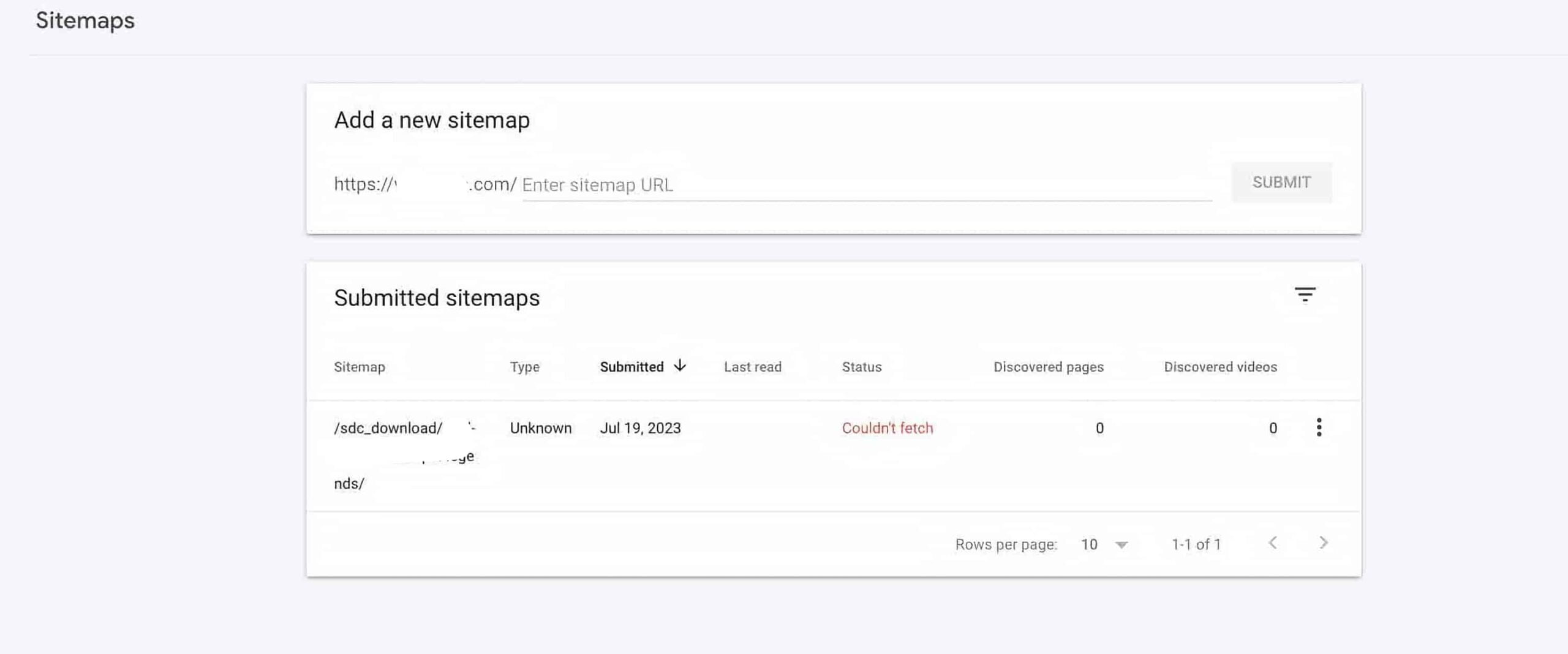
When I first checked, the site already had 11,000-12,000 pages. The website first went live July of 2023, but when I checked on September of that year here’s the current state of their sitemap on Google Search Console:
The Impact of the Wrong Sitemap
Missed Opportunities: With the wrong sitemap, Google wasn’t able to crawl and index all the pages on the site. This meant that many pages were essentially invisible to searchers.
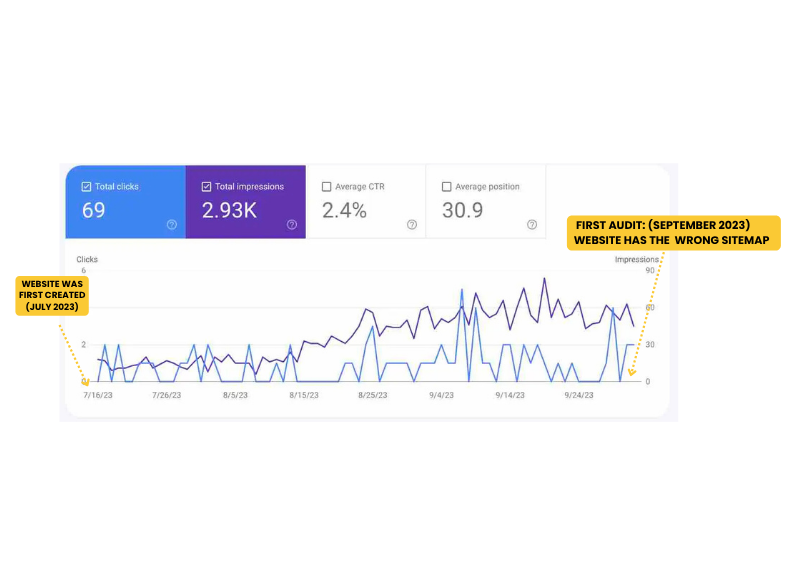
Stagnant Traffic: The site’s clicks and impressions were flatlining. Despite being live for several months, it wasn’t gaining any traction in search results.
Wasted Sandbox Period: New websites go through what’s called a “sandbox phase,” which may typically lasts 3-9 months. This is a critical time to build a strong SEO foundation.
Unfortunately, this site wasn’t taking advantage of it.
Here’s a snapshot of the site’s performance during this period:
As you can see, the site was barely getting any clicks or impressions.This is a common issue for new websites that don’t have a proper sitemap in place.
Imagine you already have more than 10,000 pages, you’d be expecting to getting a ton of traffic right?
But that was not the case here…
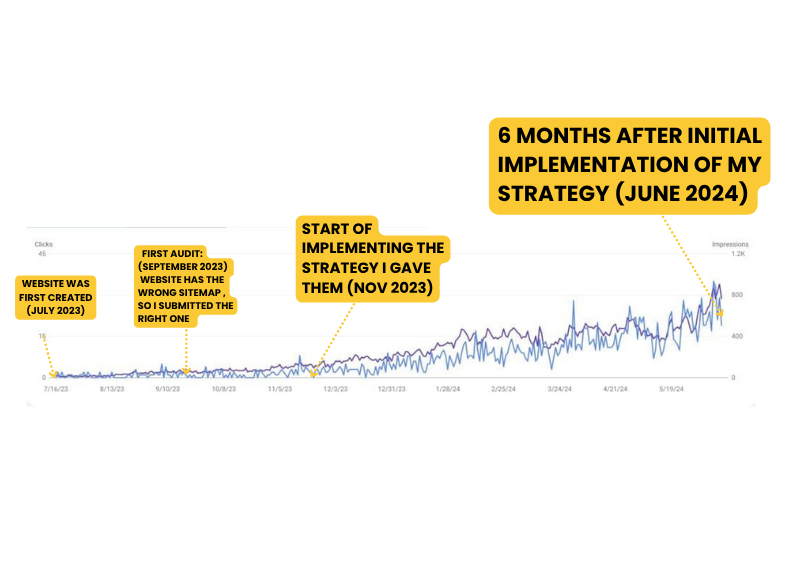
Now the above was the metric baseline and below if things will improve after the supposed sandbox period (February 2024). The best scenario that we’re looking at will be increased clicks and impressions.
SO WHAT’S A SAND BOX PERIOD?
The “Google Sandbox” is a term used in SEO (Search Engine Optimization) to describe an unofficial filter that some believe Google applies to new websites. The “sandbox period” usually lasts from a few weeks to several months (often cited as 3–6 months).
When starting a new website; It’s more important to focus on getting noticed in search results rather than worrying about getting lots of traffic quickly and ranking for specific terms.
The main aim should be to publish content regularly to address what your audience wants to know. You should also keep an eye on whether Google is finding and listing your content, and how often it shows up in search results.
Tracking clicks and impressions can help you see how well you’re doing.
The Solution
Fixing the Sitemap and Building a Strategy
When I took over, the first thing I did was conduct a baseline audit. Here’s what I found:
No Clear Strategy: The site lacked a cohesive SEO strategy, including keyword research, on-page optimizations, and internal linking.
Incorrect Sitemap: The site had submitted the wrong sitemap, which meant Google wasn’t crawling all its pages.
Step 1: Creating the Right Sitemap
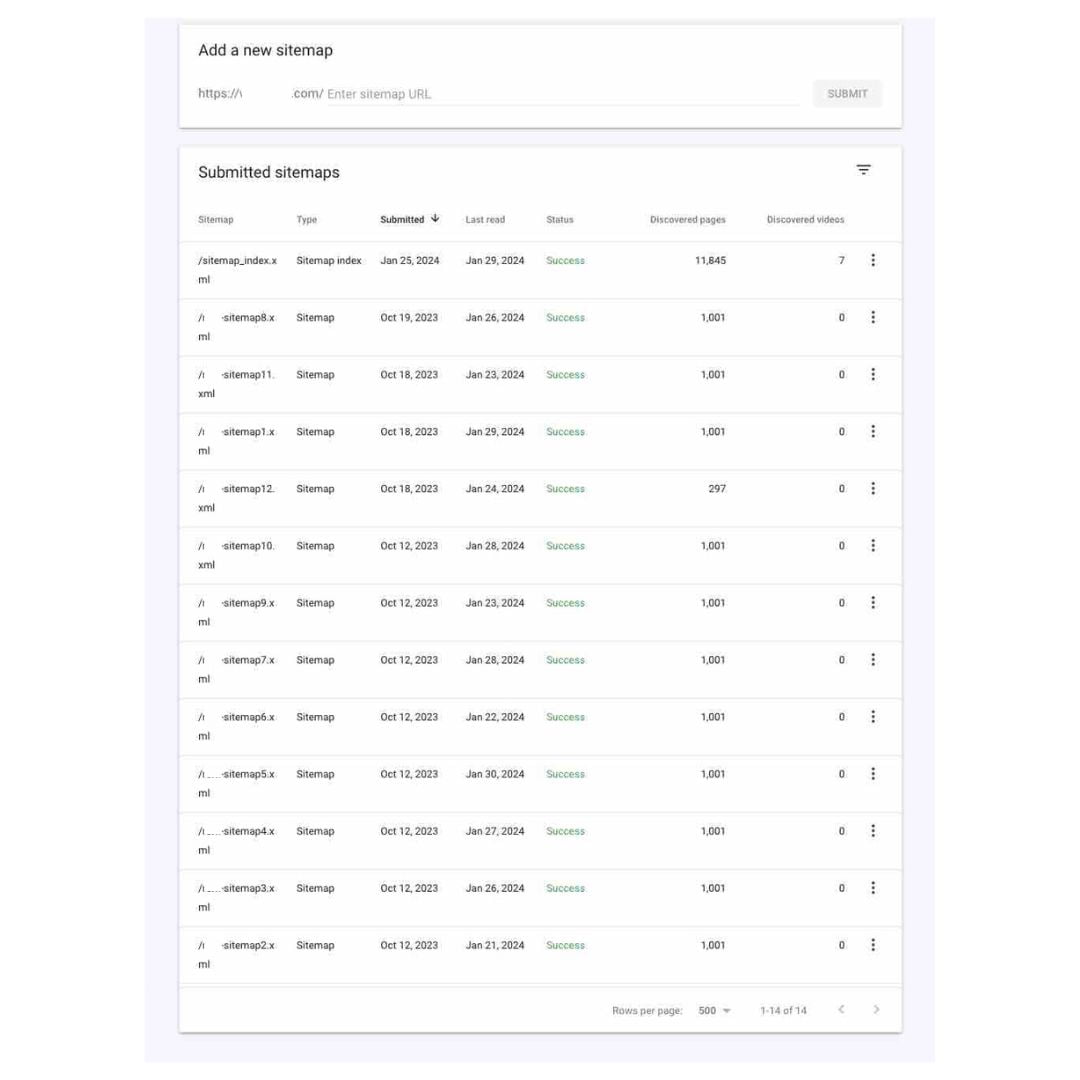
The site had 11,000-12,000 pages, which meant it needed more than one sitemap. Here’s what I did:
Generated Multiple Sitemaps: I created a sitemap index file, which acts as a master list of all the individual sitemaps.
Submitted to Google Search Console: I submitted the correct sitemap index to Google, ensuring all pages were discoverable.
I also submitted all the other sitemaps to keep track of which content were not being crawled.
Step 2: Implementing On-Page Optimizations
I also provided the client with a strategy they could implement on their own (for their web developer), including some of the below:
Optimizing H1 Tags: Ensuring each page had a clear, keyword-rich H1 tag.
Internal Linking: Creating a network of internal links to help Google understand the site’s structure and hierarchy.
Creating robot.txt filters to prevent indexing unneeded urls.
System for editting alt texts and meta datas
While the client only implemented two of my recommendations by June 2024 (H1 tags and internal linking), the results were still impressive.
The Results
A Turnaround in Performance
After submitting the correct sitemap and making a few tweaks, the site’s performance started to improve—even before the end of its sandbox period in February 2024. Here’s what changed:
Increased Clicks and Impressions: The site began to see consistent clicks and impressions, breaking away from the dreaded zero-click days.
Improved Visibility: More pages were being indexed, which meant more opportunities to appear in search results.
Here’s a look at the site’s progress:
You can see that even before the supposed end of their sandbox period (February 2024), the site was able veer away from 0 clicks in a day and continues to increase their total impressions in a day.
While the website still has a lot to improve on its SEO, you can see how a simple submission of the right sitemap and a few tweaks can have a great impact on your website.
By June 2024 ,(image above) the site was performing even better, with steady growth in clicks and impressions. While there’s still room for improvement, the impact of having the right sitemap and a few strategic tweaks is undeniable.
I believe that if they have followed everything on the strategy I made for them, they could do better but this result is still impressive for a website that is not fully optimized.
“Do I need a sitemap for my website?“
Of course! You need to submit your sitemap to search engines so your pages and content will be discovered and start showing up on the searches.
If you’re running a new website, here’s the key takeaway: Don’t skip the sitemap. It’s one of the simplest yet most effective ways to ensure your site gets noticed by search engines.
But remember, a sitemap is just the beginning. To truly succeed, you’ll also need:
Quality Content: Publish helpful, engaging content that answers your audience’s questions.
Keyword Research: Identify the right keywords to target based on what your audience is searching for.
Technical SEO: Ensure your site is fast, mobile-friendly, and free of errors.
On-Page Optimization: Use proper headings, meta tags, and internal linking to make your content easy to crawl and understand.
Let’s Break It Down Why You Need It!
The question of whether you need a sitemap isn’t always a straightforward yes or no. It depends on the size, structure, and content of your website, as well as how easily search engines like Google can crawl and index your pages.
Let’s explore this in more detail to help you decide if a sitemap is right for your site.
How to know if sitemap is a MUST HAVE
1. Large Sites (500+ Pages)
If your website is large, with hundreds or even thousands of pages, it can be challenging to ensure that every single page is properly linked and accessible to search engines. Without a sitemap, Googlebot (Google’s web crawler) might miss some pages, especially if they’re buried deep within your site’s structure or aren’t well-linked internally.
Why It Helps: A sitemap acts as a master list of all your important pages, ensuring that nothing gets overlooked. It’s like giving Google a treasure map to every corner of your site.
Example: E-commerce sites with thousands of product pages or news websites with extensive archives can benefit greatly from a sitemap.
2. New Sites with Few External Links
If your website is brand new, it likely doesn’t have many (or any) backlinks pointing to it. Backlinks are one of the primary ways Google discovers new content, so without them, your site might fly under the radar.
Why It Helps: A sitemap gives Google a direct path to your content, speeding up the discovery and indexing process. It’s like introducing yourself to Google and saying, “Hey, I’m here, and here’s what I’ve got!”
Example: A startup’s website or a personal blog that’s just launched can use a sitemap to get noticed faster.
3. Sites with Rich Media Content
If your site features a lot of videos, images, or other multimedia content, a sitemap can help Google understand and index this content more effectively. Google can use the additional metadata in your sitemap to display rich results in search, such as video thumbnails or image carousels.
Why It Helps: A sitemap allows you to provide extra details about your media files, such as titles, descriptions, and categories, which can improve their visibility in search results.
Example: A photography portfolio, a YouTube channel’s website, or a news site with embedded videos can benefit from a media-specific sitemap.
4. Sites with Frequently Updated Content
If your site is constantly being updated with new content—like a blog, news site, or event calendar—a sitemap can help Google keep up with the changes.
Why It Helps: By including the <lastmod> tag in your sitemap, you can tell Google when a page was last updated, encouraging it to revisit and reindex the page.
Example: A daily news blog or a website for a conference with regularly updated schedules.
When You Might NOT Need a Sitemap
1. Small Sites (500 Pages or Fewer)
If your site is relatively small and all your pages are properly linked, Googlebot can likely crawl and index your site without any issues. In this case, a sitemap might not be necessary.
Why It’s Optional: Googlebot is pretty good at following internal links, so if your site is well-structured and easy to navigate, it can find all your important pages on its own.
Example: A small business website with just a handful of pages (Home, About, Services, Contact) might not need a sitemap.
2. Comprehensively Linked Sites
If every important page on your site is linked from the homepage or other easily accessible pages, Googlebot can find its way around without a sitemap.
Why It’s Optional: A sitemap is most useful when there are pages that aren’t easily discoverable through internal linking. If your site’s navigation is solid, a sitemap might be redundant.
Example: A blog with a clear menu structure and internal links between posts might not need a sitemap.
3. Sites with Minimal Media Content
If your site doesn’t have a lot of videos, images, or other media files, and you’re not trying to optimize for rich results in search, a sitemap might not be as critical.
Why It’s Optional: Sitemaps are particularly useful for media-rich sites because they allow you to provide additional metadata. If your site is mostly text-based, Google can index it just fine without a sitemap.
Example: A simple brochure website or a text-heavy blog might not need a sitemap.
Should You Create a Sitemap?
While a sitemap isn’t always mandatory, it’s generally a good idea to have one. Think of it as an insurance policy for your site’s visibility in search results. Even if your site is small and well-structured, a sitemap can provide peace of mind and ensure that Google has all the information it needs to index your content properly.
Why not take the extra step to ensure your site is as search-engine-friendly as possible?
Even if you fall into the “might not need” category, creating a sitemap is a quick and easy process that can only help your site—it certainly won’t hurt.
A Cautionary Tale
Having a Sitemap Without a Strategy
To drive home the importance of a solid SEO foundation, let’s look at another example. This website was created in September 2022 and had a sitemap submitted correctly. However, it lacked consistent content publishing, keyword research, and technical SEO.
Here’s what happened:
As you can see, this other site above never made it out of the sandbox phase. Despite having a sitemap, it failed to gain traction because it didn’t have the other essential elements of a strong SEO strategy.
Would you rather be never getting out of the sandbox?
Frequently Asked Questions
Can you do the same for my website?
I can help you set up your newly created website on Google Search Console, but it should also include keyword research, technical and on page optimizations.
I was responsible for the initial audit, strategic plan for 6 months, on page and technical optimization planning as they have a different team for execution.
They only wanted me to create a strategy for them.
Were you in charge of the setup of their Google Search Console account?
No, they already have set up their GSC account, I only added the right sitemaps. But I also do GSC setup for my clients if needed.
We’ve all been there. You’ve poured your heart into creating a beautiful website, filled it with content, and maybe even shared it on social media.
But despite your efforts, the traffic just isn’t coming. It’s frustrating, right? You’re left wondering, “What am I doing wrong?”
This case study features an old service-based website created last 2019 with a few content that seems to be ranking some of its pages already , but seems to be getting little to no clicks on most days for years now.
Here’s the hard truth: the problem might not be your content itself, but the lack of a clear strategy behind it.
Writing content without a plan is like setting off on a road trip without a map—you might move forward, but you’re unlikely to reach your destination. Let me show you how a content strategy can transform your website’s performance, using a real-life case study as an example.
A Year After
Did you know that you can resort to having retainer SEO work after and still get good results?
Just before we jump to the details, here’s are the June 2025 updates on the site:
The Challenge
A Stagnant Website
One of my clients came to me with a service-based website they’d launched back in 2019. Over the years, they’d published a handful of blog posts, and some of their pages were ranking for certain keywords.
But despite this, their traffic was minimal—some days, they’d get little to no clicks at all. After five years, they realized something needed to change.
Here’s what their website looked like before we started working together:
No Google Search Console Profile: They’d never set one up, which meant they had no way to track their performance or identify issues.
Low Traffic: Despite having some ranking pages, their overall traffic was stagnant.
No Clear Strategy: Their content was scattered, with no clear focus or alignment with their business goals.
Their primary objectives were:
To rank for location-based keywords.
To target a specific niche keyword.
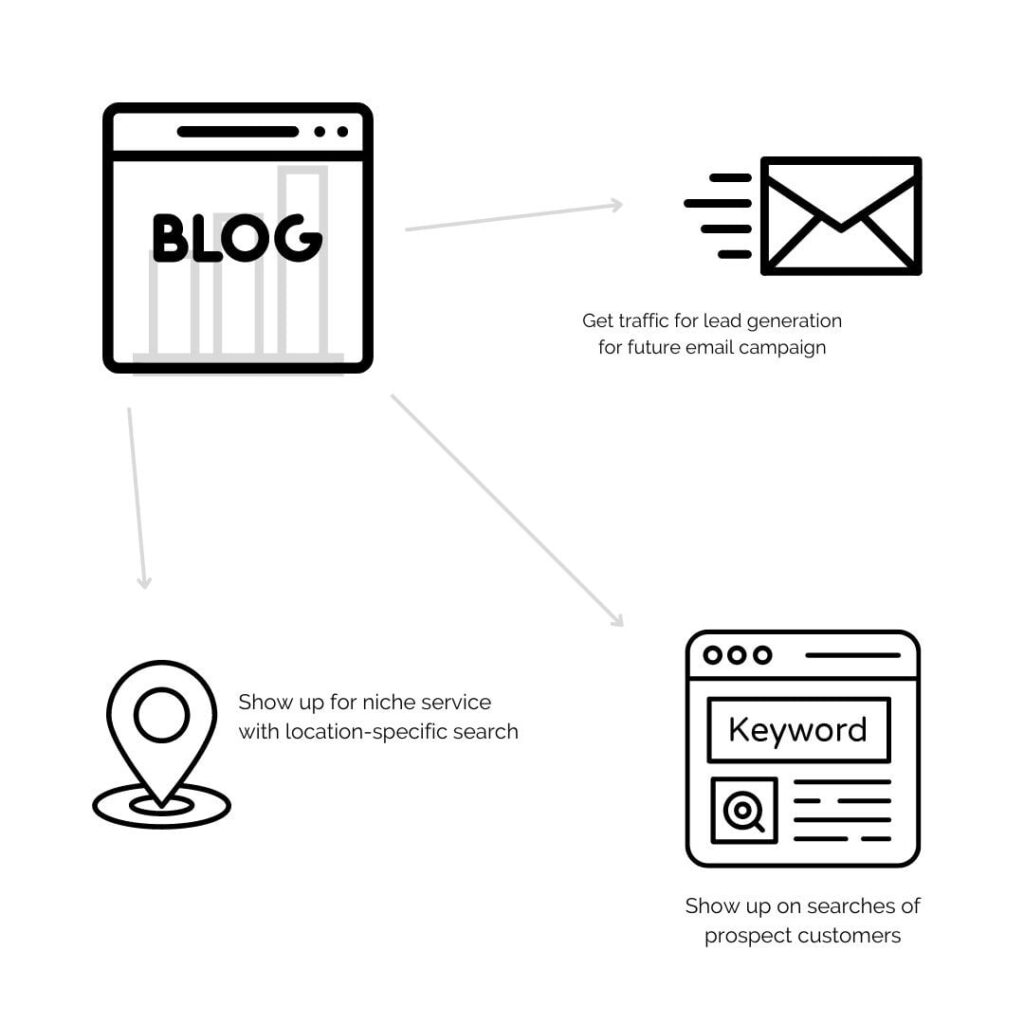
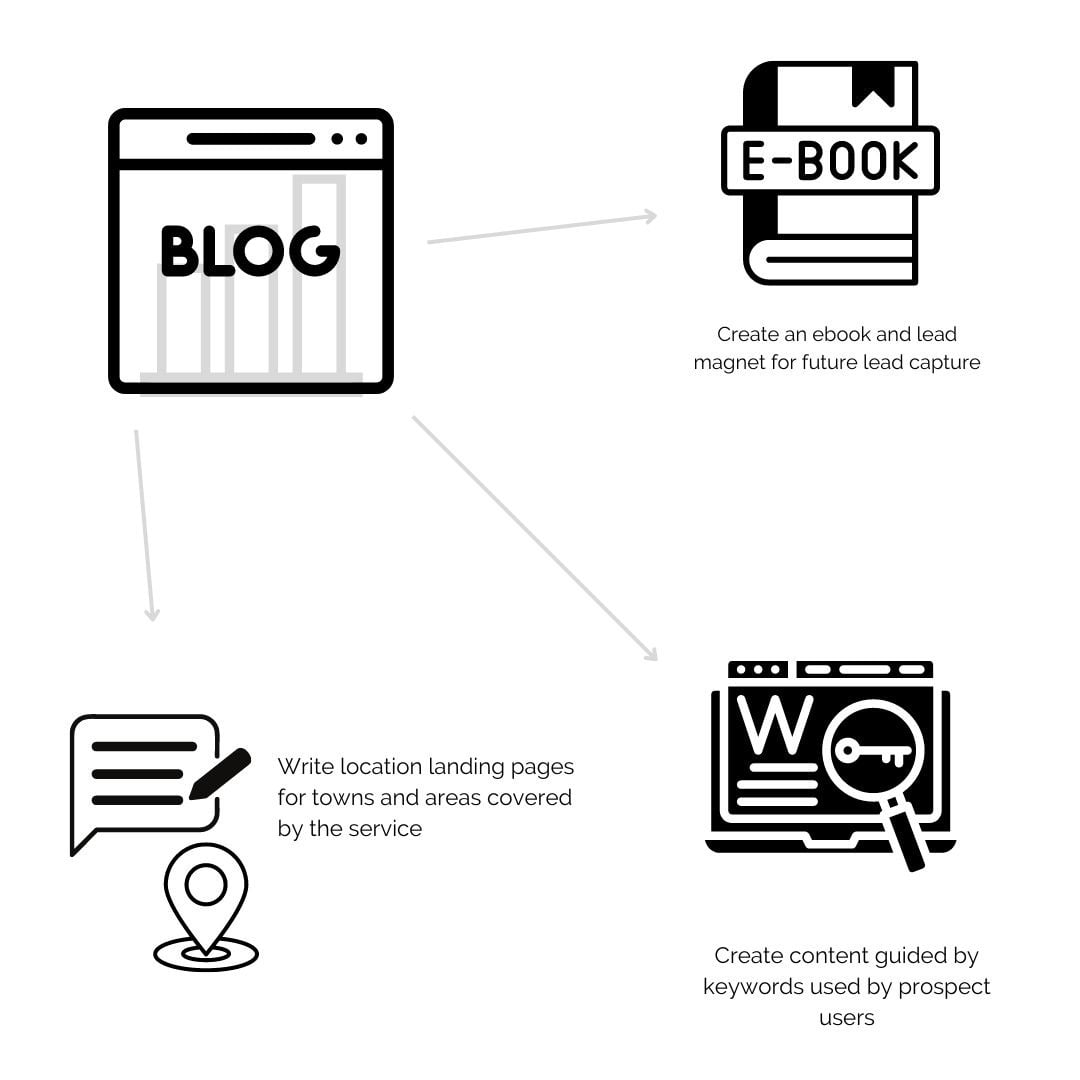
To create an ebook and launch an email campaign.
The following are the website’s metrics before the optimization.
For 5 years, they never created a Google Search Console profile so it was the first thing I did while doing the website audit.
The client came to me to ask for help on getting traffic for their business objective and to create an ebook for them and help them on their planned email campaign.
Their primary objective is to show up for location and a specific niche keyword.
Why a Content Strategy is a Game-Changer
A content strategy isn’t just about writing more blog posts or posting on social media. It’s about creating a roadmap that aligns your content with your audience’s needs and your business goals. Here’s why it’s so powerful:
Know Your Audience: A strategy helps you understand who you’re talking to. Instead of guessing what your audience wants, you can create content that speaks directly to their pain points and interests.
SEO Optimization: A good strategy ensures your content is optimized for search engines. This means using the right keywords, structuring your pages correctly, and making it easy for Google to understand what your site is about.
Consistency: Posting regularly keeps your audience engaged and coming back for more. A strategy helps you plan and maintain a consistent publishing schedule.
Alignment with Goals: Whether you’re looking to drive sales, generate leads, or build brand awareness, a strategy ensures your content supports these objectives.
The Risks of Flying Blind
When you create content without a strategy, you’re essentially shooting in the dark. Here’s what can go wrong:
Missing the Mark: Without understanding your audience, you might end up writing content that doesn’t resonate with them.
Inconsistency: Posting sporadically confuses your audience and makes it harder to build a loyal following.
Poor SEO: If your content isn’t optimized, search engines won’t rank it, and potential visitors won’t find it.
Lack of Direction: Without a clear plan, your content can feel disjointed and fail to build momentum.
The Solution
A Comprehensive Content Strategy
To turn things around for my client, I started with a thorough website audit. Here’s what we uncovered and how we addressed it:
Technical and On-Page Optimizations: The website needed several fixes, including improving site speed, fixing broken links, and optimizing meta tags.
Keyword Realignment: Many of the existing pages were targeting the wrong keywords. We conducted intensive keyword research to identify the best opportunities for their niche and location-based goals.
Content Updates: The blog posts that were already ranking needed updates to make them more helpful and relevant to readers.
New Content Creation: Using the insights from our keyword research, we created new blog posts, location pages, and an ebook designed to attract their target audience.
The Results
Dramatic Improvement
Within just four months, the website’s performance improved significantly. Here’s what changed:
Higher Engagement: The updated and new content resonated with readers, leading to longer time on site and lower bounce rates.
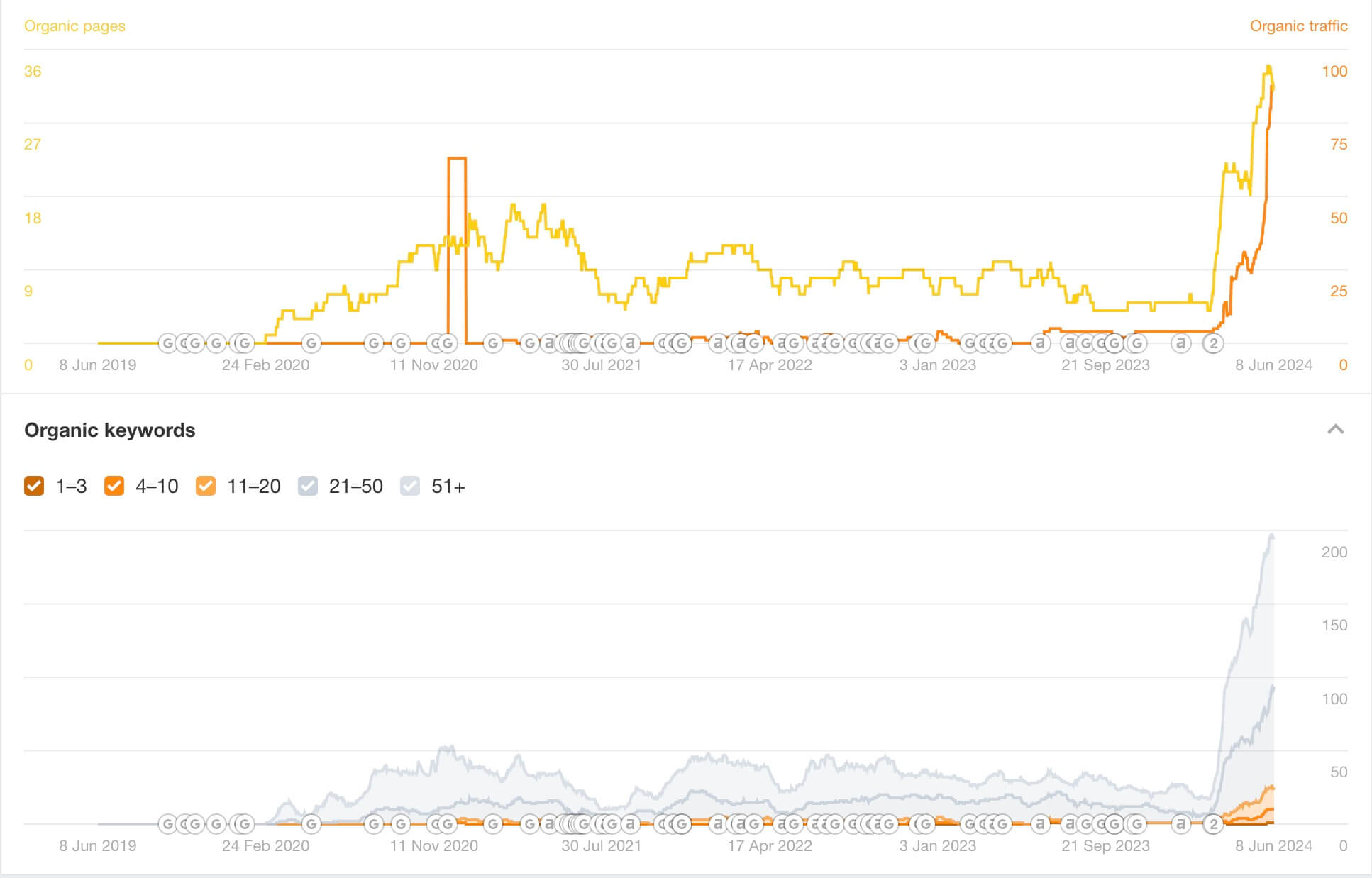
More Keywords Ranking: The number of keywords the site ranked for increased dramatically, as shown in Ahrefs.
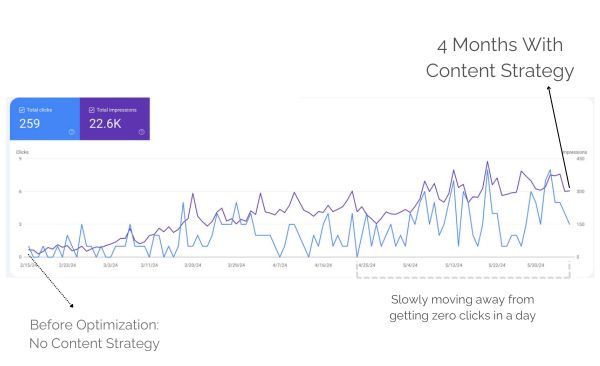
Increased Organic Traffic: Google Search Console data confirmed a steady rise in organic traffic and impressions.
Stats last June 2024
What This Means for You
Imagine what your website could achieve with a solid content strategy in place. Over five years, the difference between a strategy-driven approach and winging it could be massive. Here’s what you can take away from this case study:
Be Consistent: Regular updates and new content keep your audience engaged and help you build authority in your niche.
Start with a Plan: A content strategy gives you direction and ensures every piece of content you create serves a purpose.
Optimize for SEO: Technical and on-page SEO are essential for making your site visible to search engines.
Create Helpful Content: Focus on creating content that solves problems and answers questions for your audience.
Here’s to Getting More Traffic To Your Website
So the what can we take from this… well, I guess today is never too late to start getting a plan for your website.
Getting more traffic to your website should not only rely on links shared on your social media. The key to make it sustainable is to have organic traffic that you can only get when you have a solid technical structure, on page SEO optimization every now and then, and creating helpful content guided by a keyword strategy.
Frequently Asked Questions
Can you do the same for my website?
Yes your website could rank with my strategy, but not every website could get the same result in 4 months as my content strategy is not just about creating content but also includes optimizing the website to have a web structure with a good technical SEO and keyword map in mind and sometimes it takes longer specially when there are a lot of pages and fixes needed.
I did everything from initial audit, monitoring, on page, and technical SEO optimizations on WordPress , keyword research, content creation and content strategy.
My campaign for them is not over yet since ranking the website is just the first phase of it there are more to be done for their campaign.
Which package did they get?
They chose the Custom package since they were only willing to work on a budget and had other goals than just SEO. Since this is the case, the implementation timeline was beyond 6 months and inclusions of the project varies.
For example, they did not include Offpage SEO, but eventually with the quality content produced they were able to get organic backlinks from relevant websites from their niche.
How Important Are Backlinks To SEO? Truth is, it depends.
While backlinks can significantly boost your website’s visibility and rankings, they’re not the only factor that matters. In this detailed case study, we’ll dive deep into the actual impact of backlinks on search engine rankings and explore whether the conventional wisdom of “more backlinks = higher rankings” holds true.
The Challenge
Declining Backlinks and SEO Performance
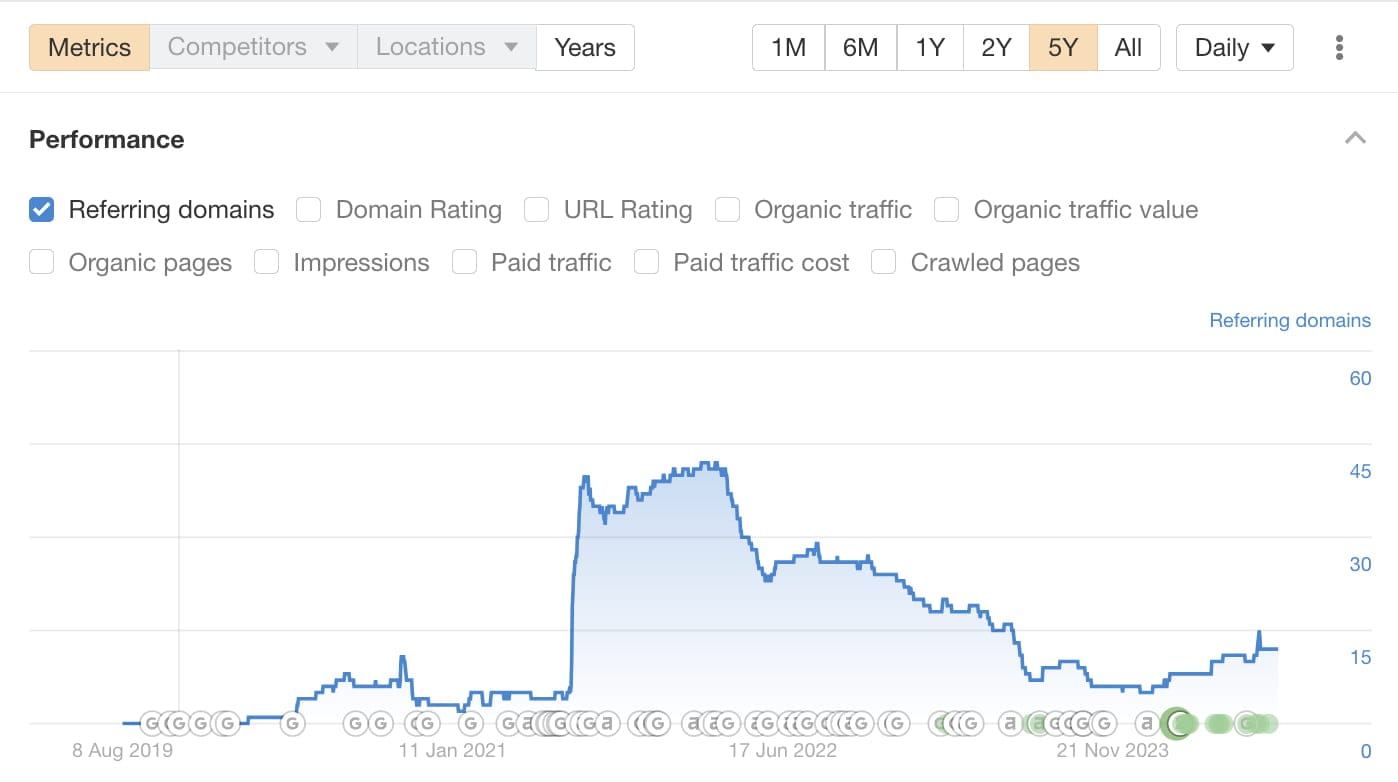
Imagine this scenario: Your website has been steadily losing referring domains and backlinks over the past year. This decline raises a critical question—do the number and quality of backlinks really have a significant impact on your site’s SEO performance?
Do backlinks really matter?
To answer this, let’s look at a real-world example. The graph above (from Ahrefs) shows the number of referring domains—websites that linked to a page on the client’s site or just the same that refers to backlinks. Some of these domains may have provided just one backlink, while others may have linked multiple times.
Many SEO specialists would see this decline and immediately recommend a backlink-building strategy, often charging a premium for their services. And to be fair, acquiring backlinks is hard work—it requires outreach, relationship-building, and sometimes even financial investment.
But here’s the catch: not all backlinks are created equal. A single high-quality backlink from a reputable, authoritative site can be far more valuable than hundreds of low-quality links from spammy or irrelevant domains.
This brings us to two key questions:
How do we determine if a backlink is high-quality?
Are backlinks the only thing you need for SEO success?
We’ll come back to these questions later in the case study, but first, let’s talk about the solution we implemented for this client.
The Solution
A Content-First Approach
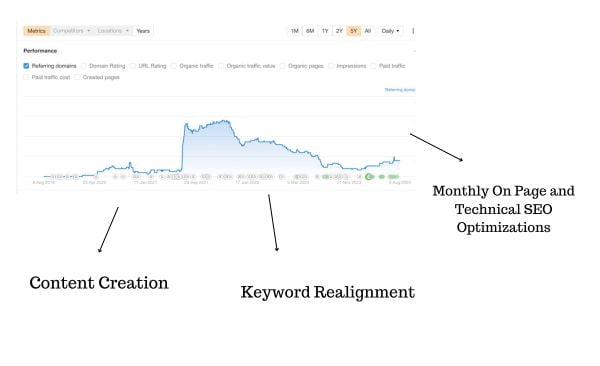
When I first audited this website in February 2024, I noticed something interesting. Despite having a decent number of backlinks, the site wasn’t ranking well for its target keywords. This led me to propose a strategy focused on content creation, keyword realignment, and monthly on-page and technical optimizations.
You might be wondering: Why didn’t I recommend off-page optimizations (like backlink building) right away?
The answer lies in the results I achieved below.
The Results
Content Outperformed Backlinks
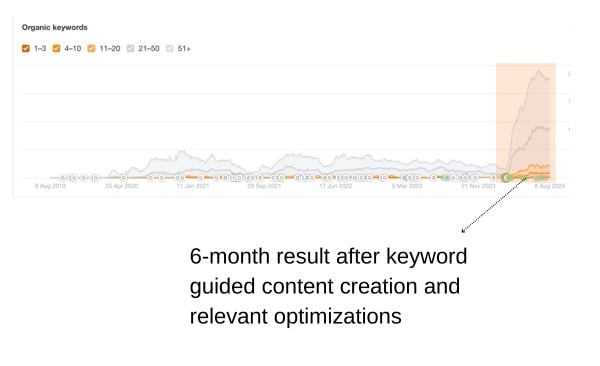
After implementing the content-first strategy, the website saw significant improvements in keyword rankings and organic traffic—without focusing on acquiring more backlinks.
Here’s what happened:
As you can see even though the website had a number of backlinks for years, it did not drive the website to gain keywords and help it show up on Google Searches. While we cannot discard the importance of backlinks, it should be a second level strategy after consistently ranking on Google Search.
Keyword Rankings Improved: By aligning content with the right keywords and optimizing on-page elements, the site started ranking for more relevant search terms.
Organic Traffic Increased: As the site climbed the rankings, it began attracting more visitors from Google searches.
User Engagement Rose: High-quality content kept visitors on the site longer, reducing bounce rates and improving overall engagement.
The takeaway? Even though the website had a decent number of backlinks, those links alone weren’t enough to drive meaningful results.
Content was the game-changer.
As an SEO specialist working for 4 years now, I know that while backlinks are important, content should be the first priority since content is like the backbone that amplify the effect of the backlinks.
THROUGH THIS CASE STUDY, ONCE AGAIN, WE PROVED THAT QUALITY CONTENT IS A GREAT DRIVER OF TRAFFIC AND ONLINE VISIBILITY THAN BACKLINKS.
The lessons from this case study are clear: while backlinks are still a vital part of SEO, they shouldn’t overshadow the importance of content.
Adopting a content-first strategy for not yet ranking website can help build the foundation before harvesting the benefits of backlinks but also builds a strong foundation for sustained SEO success and better user engagement.
Why Content Should Be Your First Priority
Content is the Foundation: Think of your website as a house. Backlinks are like the decorations—they make it look good, but they won’t hold up the structure.
Content, on the other hand, is the foundation. Without high-quality, relevant, and engaging content, even the best backlinks won’t get you far.
Search engines love content that meets what users are looking for, as it leads to better user engagement and higher rankings.
Content Attracts Natural Backlinks: Great content pulls in backlinks effortlessly. When your site offers real value and credibility, other sites are naturally inclined to link to you.
By focusing on crafting high-quality content, you’re more likely to engage in organic link-building. This natural link-building is not only more sustainable but also more effective than forced or paid backlinks.
Content Ensures Long-Term SEO Health: Search engines like Google are constantly updating their algorithms to prioritize high-quality content.
Google and other search engines are continually refining their algorithms to favor relevant and high-quality content. If your site consistently offers fresh and engaging content, it’s more equipped to handle changes in SEO algorithms and maintain or even boost its ranking.
Content Boosts User Experience: Great content keeps visitors engaged, reduces bounce rates, and increases the likelihood of conversions—all of which are key ranking factors.
So, How Important Are Backlinks to SEO?
The answer depends on where your website stands.
If you don’t already have ranking content, acquiring backlinks will only give you a small boost.
But if you’ve got solid content that’s already ranking and you’re looking to outrank competitors, quality backlinks can make all the difference.
What Makes a Backlink High-Quality?
Quality backlinks are vital for effective SEO as they improve a website’s search rankings and enhance its credibility.
Not all backlinks are created equal. Here’s what to look for in a quality backlink:
High Domain Authority: Links from authoritative sites carry more weight.
Relevance: The linking site should be relevant to your niche or industry.
Contextual Integration: The link should be naturally placed within relevant content.
Dofollow Attribute: This allows the link to pass “link equity” to your site.
Traffic and Trustworthiness: Links from sites with high traffic and low spam scores are ideal.
Acquiring these backlinks often involves creating exceptional content, conducting targeted outreach, and building relationships within your industry.
Frequently Asked Questions
Can you do the same for my website?
Yes I can create a strategy for you that is customized for your website need and target outcome. Implementation time may vary in time depending on your budget and results are also variable due to the different competitiveness of different business niches.
Below is the current metrics of the website that I handled a year ago. While I no longer have access to their Google Search Console, here is an overview of what I did for them.
This is the current Ahrefs metrics of the websiteAll time performance of the website until June 2024
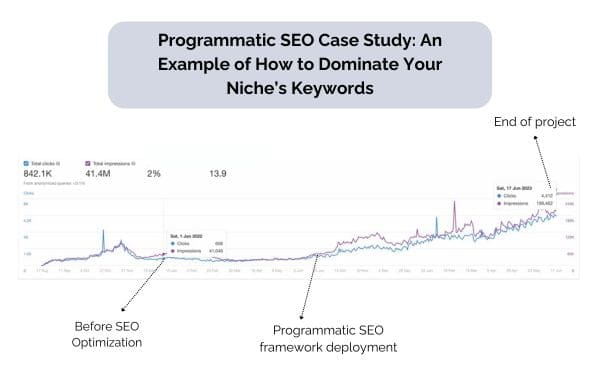
Programmatic SEO and UGC can yield tremendous benefits for brands seeking to optimize a business’s online presence. Both strategies rely heavily on high-quality content and engaging visuals.
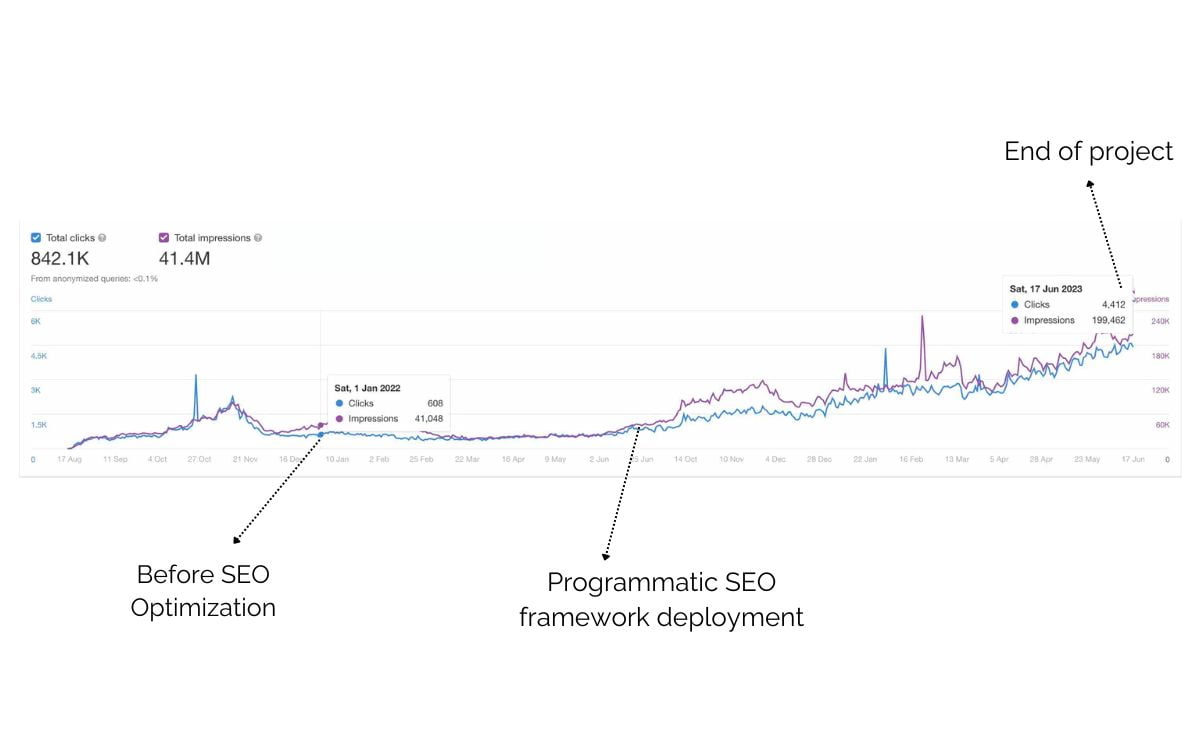
I was wrapped in a project that used them in tandem and it was majestic! IT DEFINITELY created momentum and keyword domination and simultaenously developed a more intricate yet personalized narratives around the product.
The Challenge
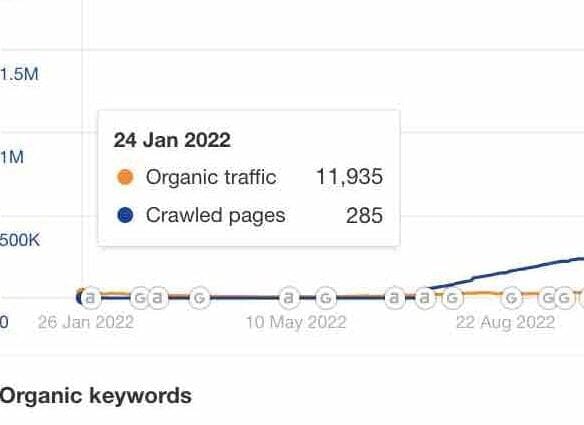
Baseline stats (January 2022) from the first few audits before the optimization
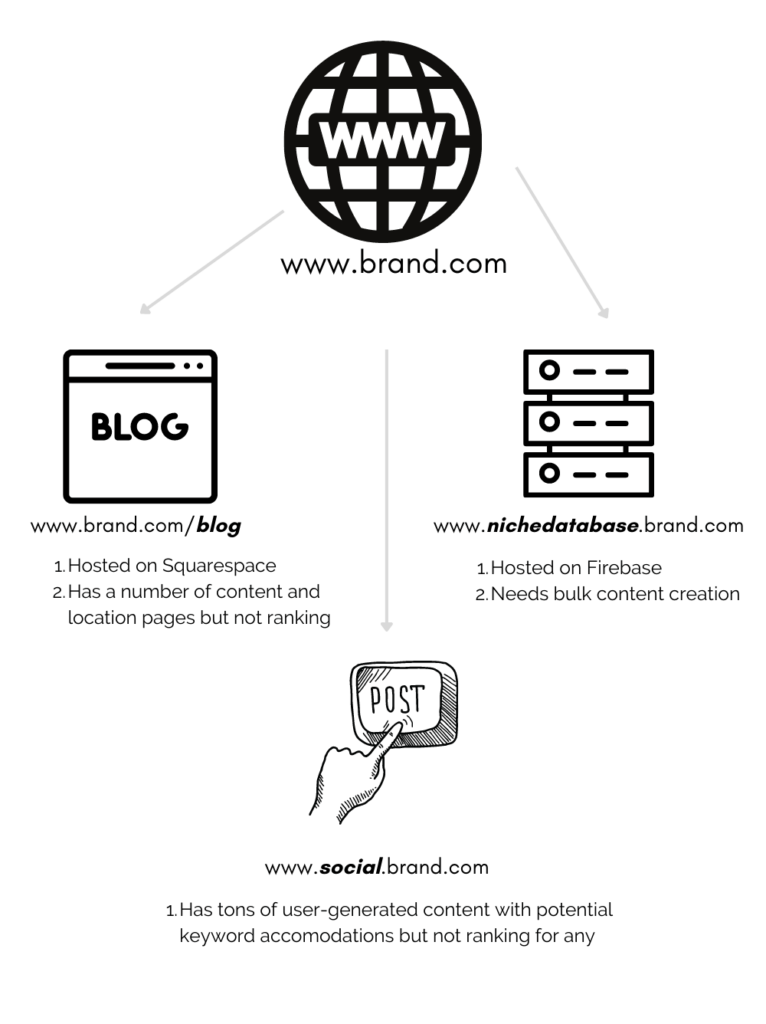
The social brand started as a blog in Squarespace in 2020 then it added two subdomains (both on a Firebase server and host) to cater to the social platform (mobile app) and a niche-specific database that they put up to help their brand grow. (You can click images to expand)
The brand was a great programmatic SEO example of a strategic implementation as they were about to bulk create new content and did not get a penalization by the then rolled out, Helpful Content Update by Google (September 2023).
Their blog and subdomains has decent traffic when it was first crawled for audit (2022) but are not organically ranking for their niche’s important keywords and both subdomains has potential keyword accommodation due to the amount of keyword-rich content produced everyday on their social feed + their niche-related database.
The Solution
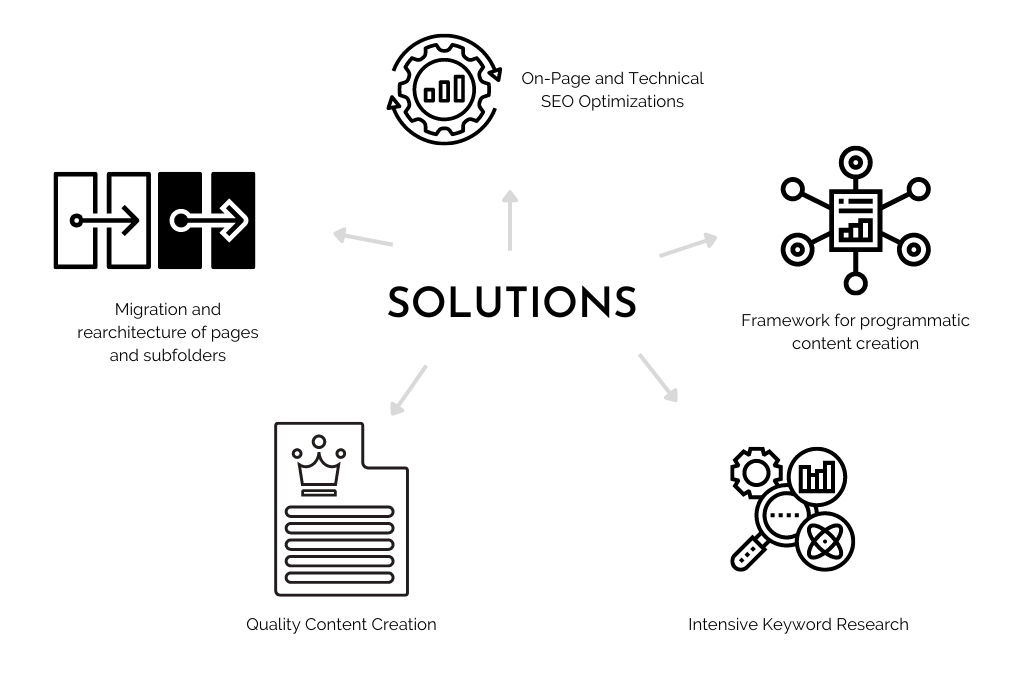
A website audit showed needed technical and on-page optimizations.
Rearchitecture of their pages and subfolders to maximize the use of their user-generated content.
A number of quality content after keyword research were created using long-tail keywords to gain traffic and rank them on the first page.
Intensive keyword research was also done to rank low-hanging keywords and monopolize ranking for their database content.
Framework was created for programmatic content creation for their database.
The Results
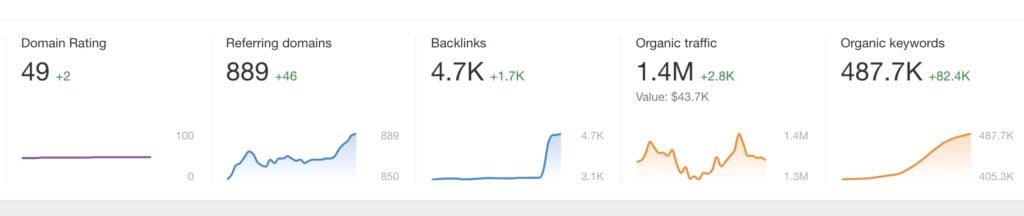
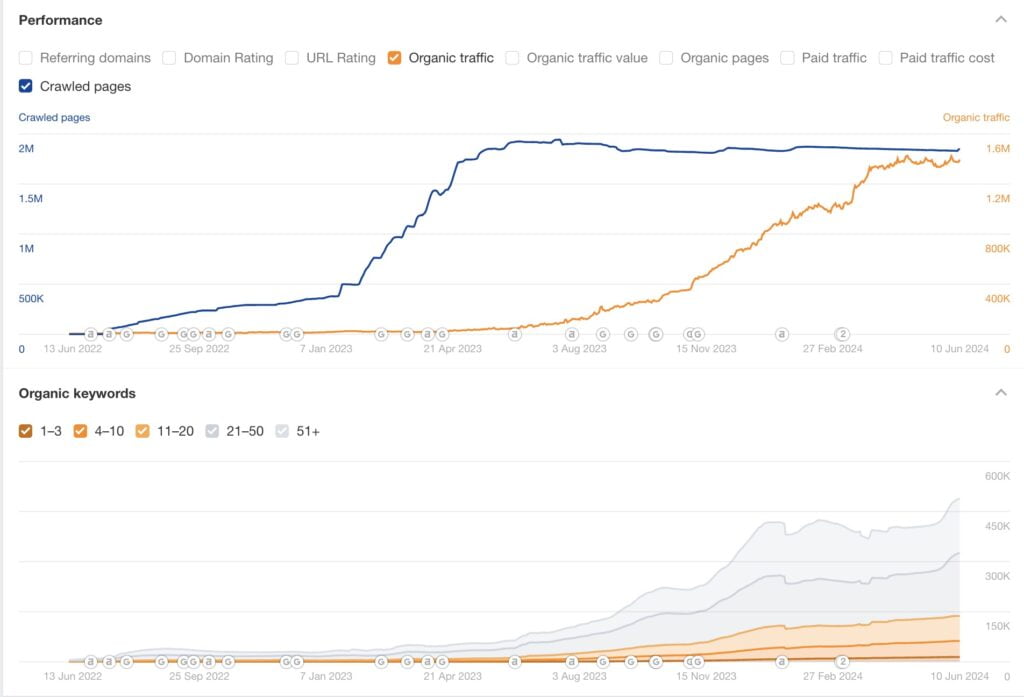
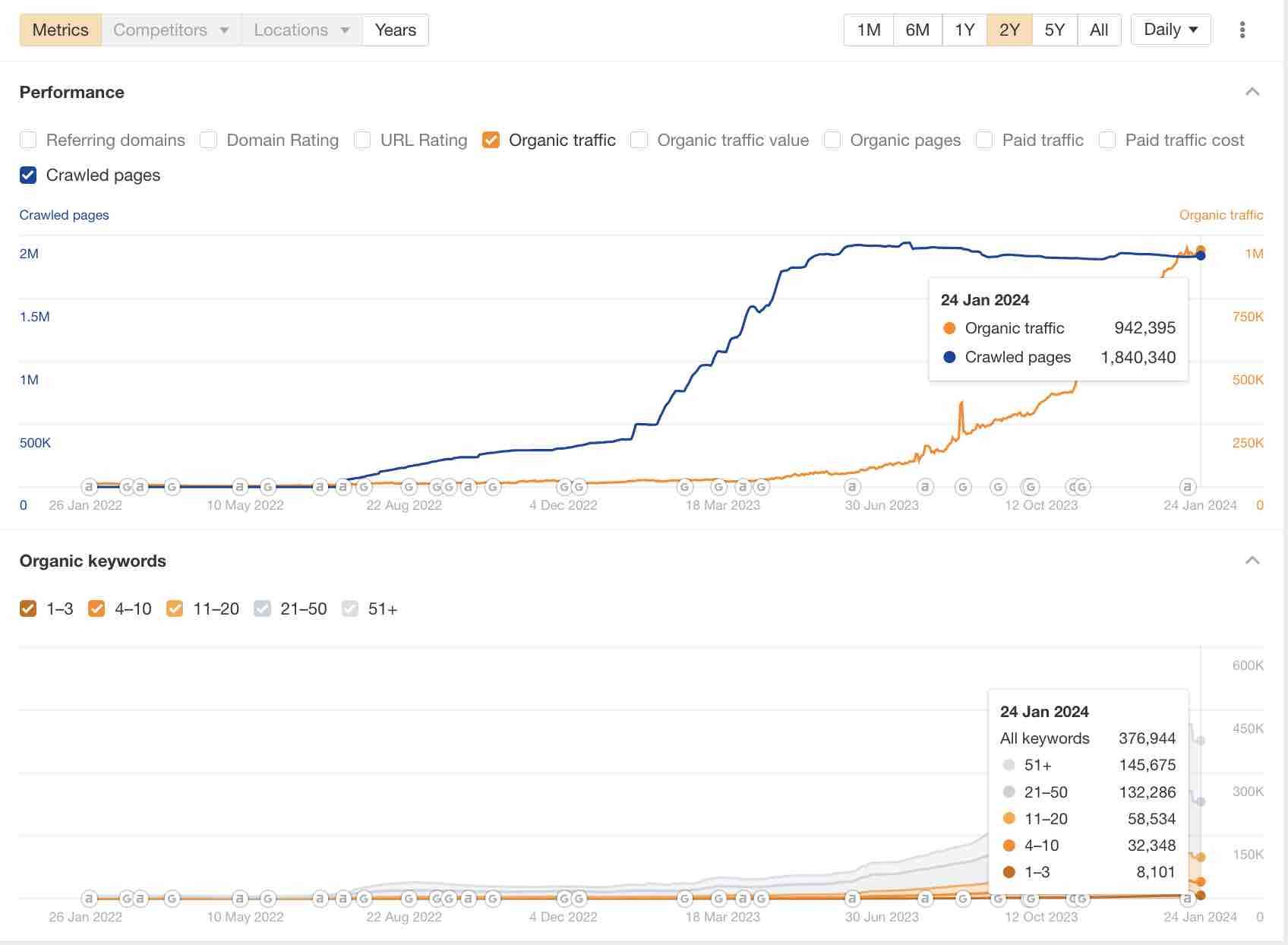
This is the current Ahrefs metrics of the website – getting from 13.6K to 1.4 M organic traffic in 2 years!
SEO optimizations, folder restructuring and web migration helped take advantage of their user-generated content to rake in traffic and rank for their niche’s keywords. Currently they get an estimate of a little less than 1M Traffic for the 1 million+ pages that they have.
Stats from Ahrefs (January 2024)
Below is the all-time performance of the website up until June 2024, just to compare on its January performance. This is an importance comparison since Google rolled out a Core Update last March and 2 other updates after it, but the website has continued to rise in keywords and pages indexed.
All time performance of the website until June 2024
The programmatic content creation framework continued to create more pages for their database that also continued to help them gain traffic and dominate keywords that they have intended to do for their brand. You can notice from the graph above that there was a great increase in crawled pages from May to August that signals the indexing of their newly created content using the content creation framework.
You might be wondering.. “so what’s in that framework?“
While they have a great team of developers and people on the back end to implement content creation at scale, the great backbone of its implementation is having a solid keyword research, a simple content outline and great technical SEO in place. You might even be surprised that one can use a Google sheet to batch create the content!
Major Takeaways from this Programmatic SEO Case Study
So the what can we take from this?
The key to their success lay in the meticulous planning and execution of SEO optimizations, including technical and on-page adjustments, and the innovative use of UGC to bolster content richness and diversity. This synergy between Programmatic SEO and UGC not only facilitated the brand’s growth but also set a new standard for digital marketing strategies aimed at enhancing online visibility and user engagement.
Frequently Asked Questions
Can you do the same for my website?
Every website has a different need and while programmatic SEO can be really helpful, I would still need to do an initial audit of the site to determine if this strategy is what you need.
I did the initial audit, monitoring, on page, and technical SEO optimizations before the migration and bulk content creation.
I was in charge of the keyword research and creation of the content template for bulk content creation. I also created a working demo consisting of a google sheet sample for the database for content. The developers and back end engineers rolled the process out on their own with the Google Sheet’s tables and output as a guide.
Were you in charge of the web migration?
No, the developer and back-end engineer were the ones responsible for the migration. If you have migration concerns, do connect with me for further information.